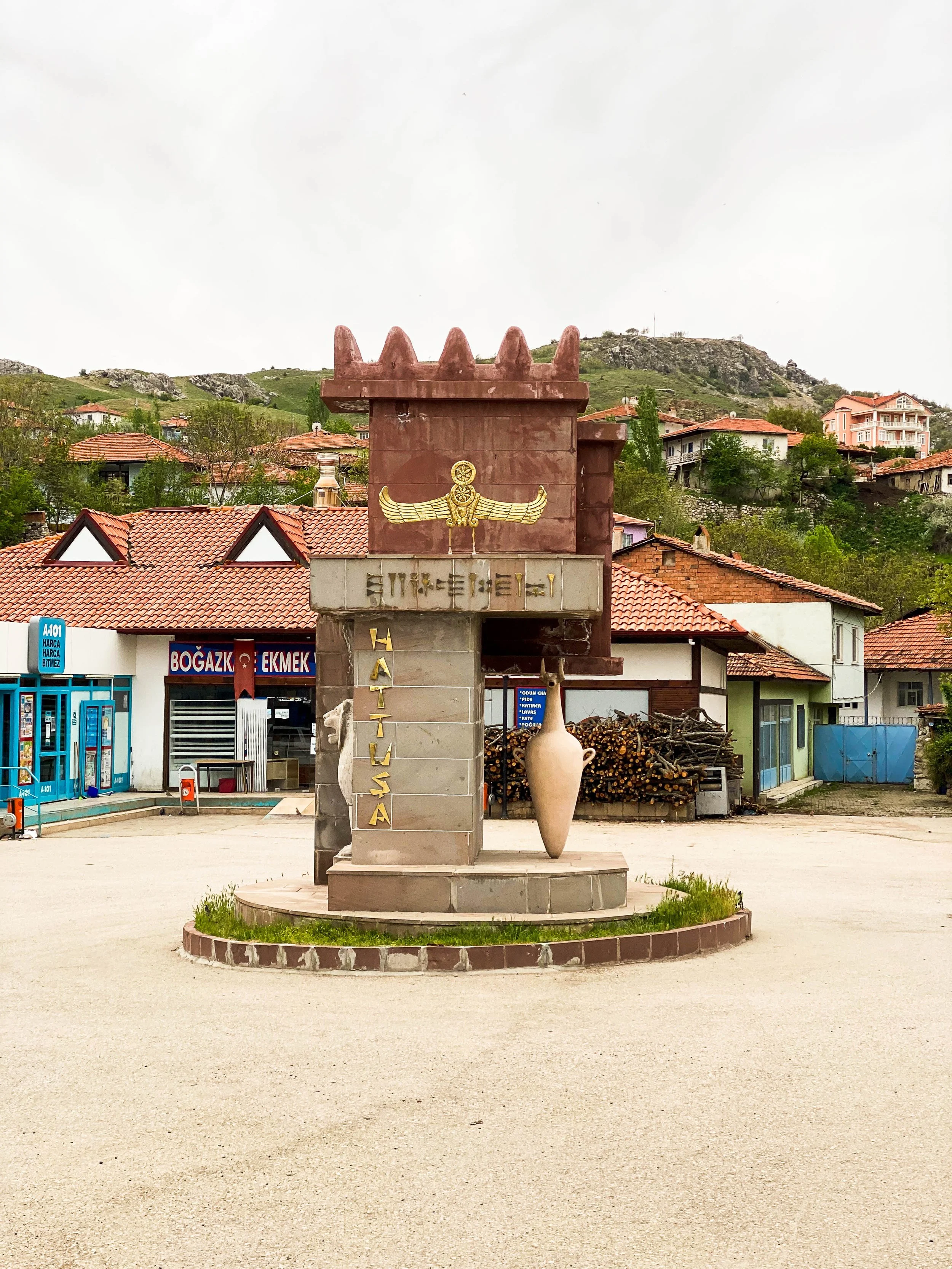
Yazilikaya, Bogazkale Turkiye
“Then Rebekah said t Isaac, “I loathe my life because of the Hittite women [Esau had married two Hittite women Gen 26:34] If Jacob marries one of the Hittite women like these, one of the women of the land, what good will my life be to me?” Gen 27:46
These Hittite women that made Rebecca’s life a misery were remnants of the great Hittite empire of Anatolia and Syria. It’s likely that part of the misery came from the Hittite worship of a huge pantheon of false gods.
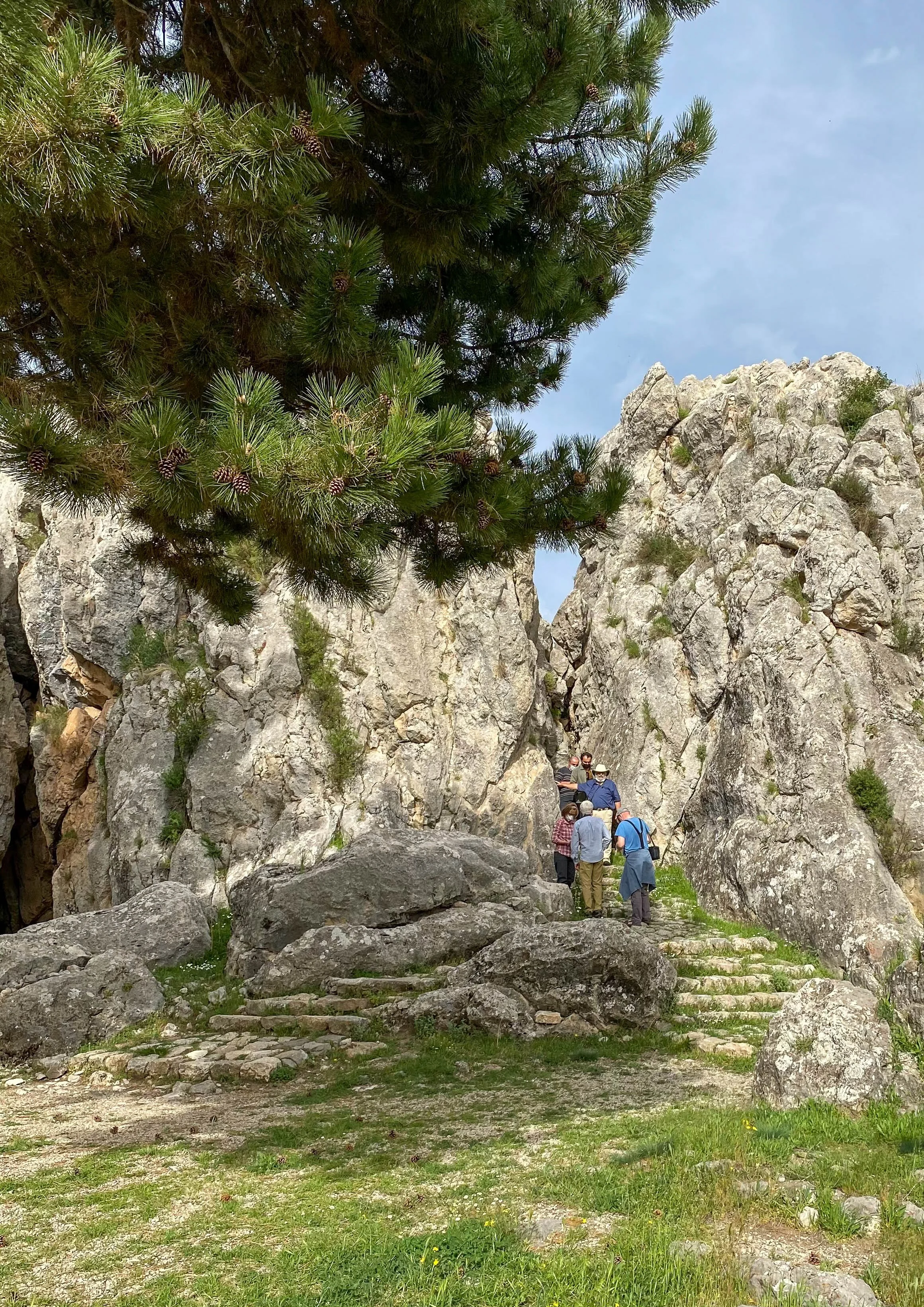
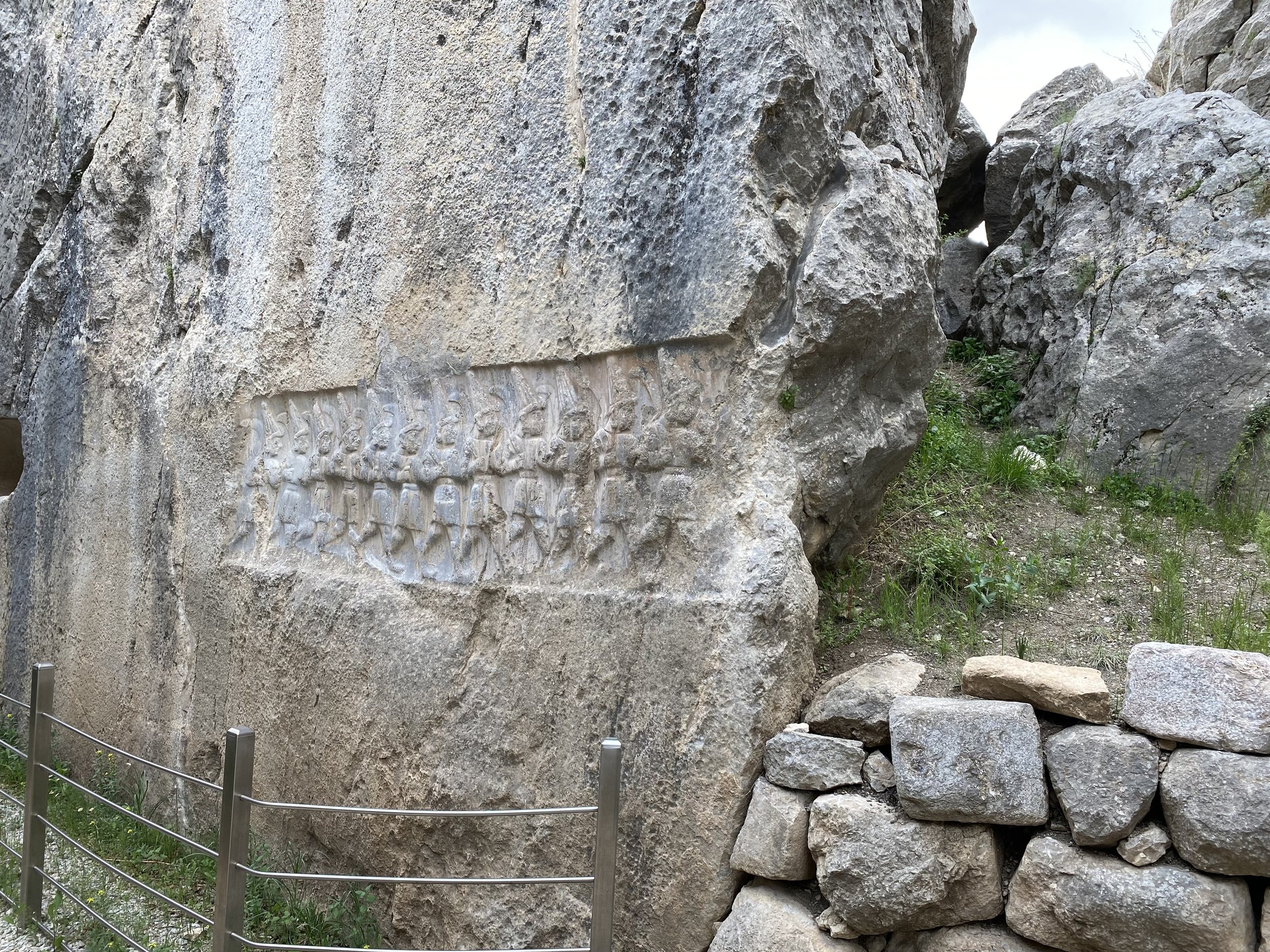
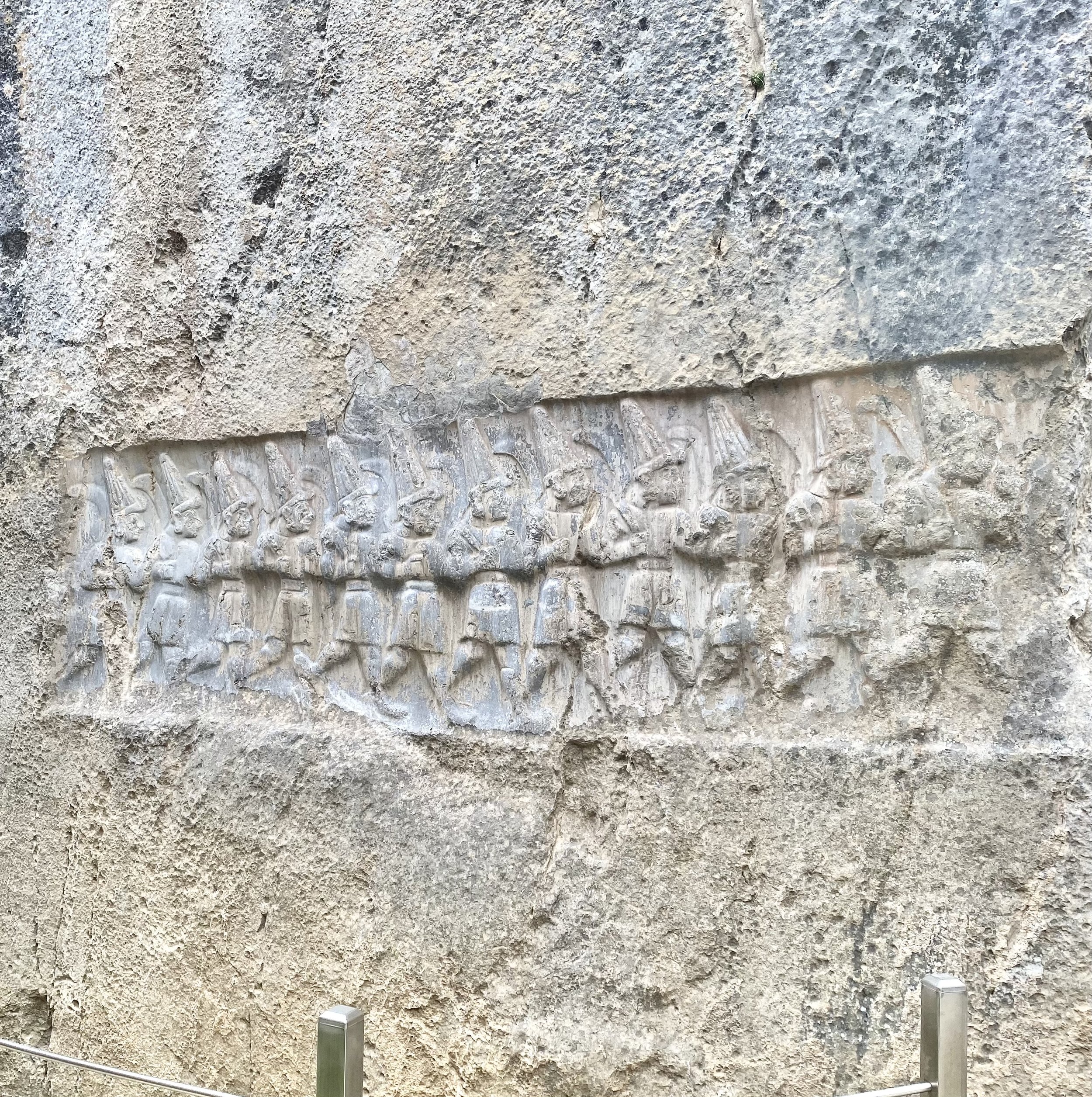
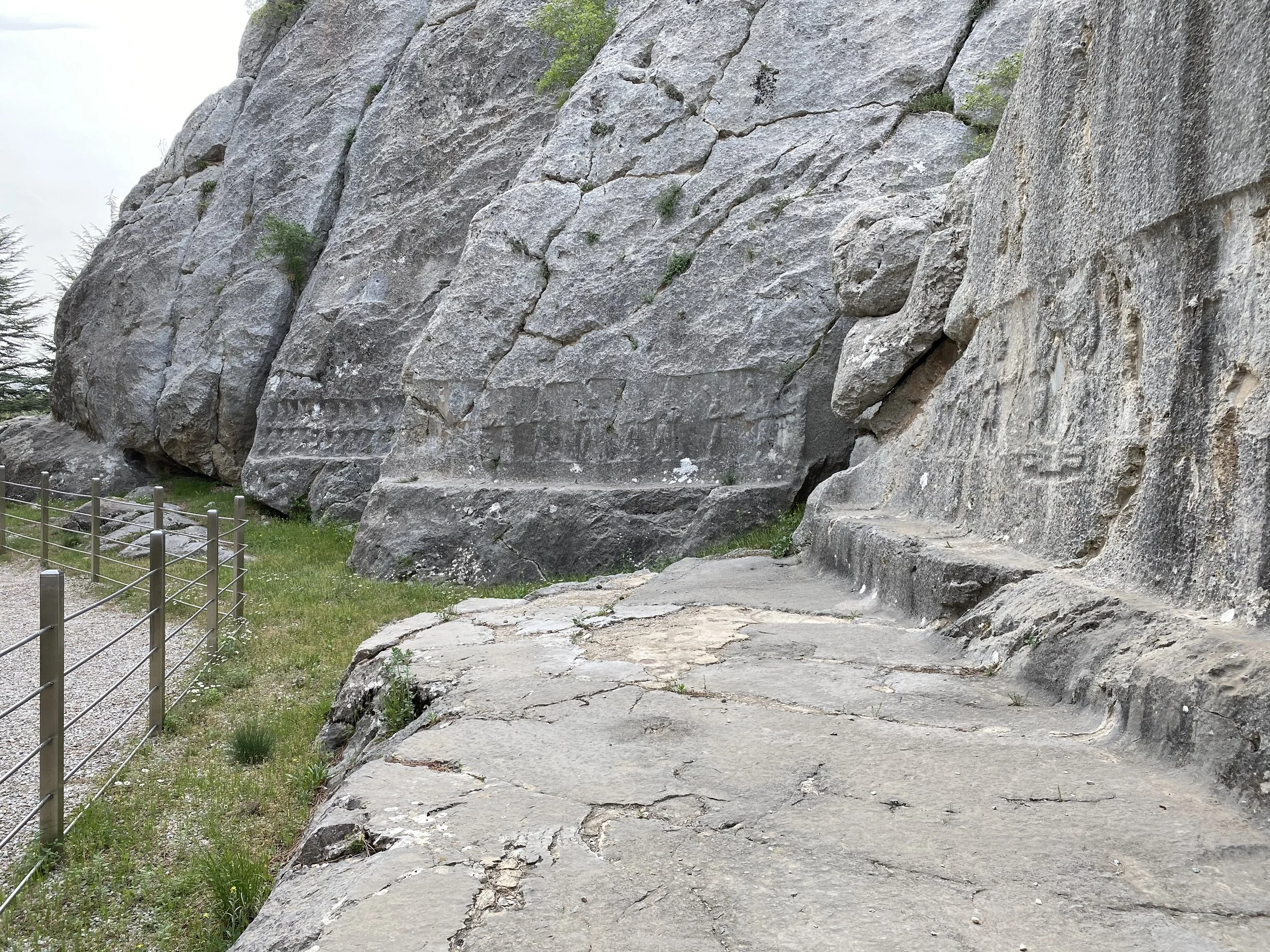
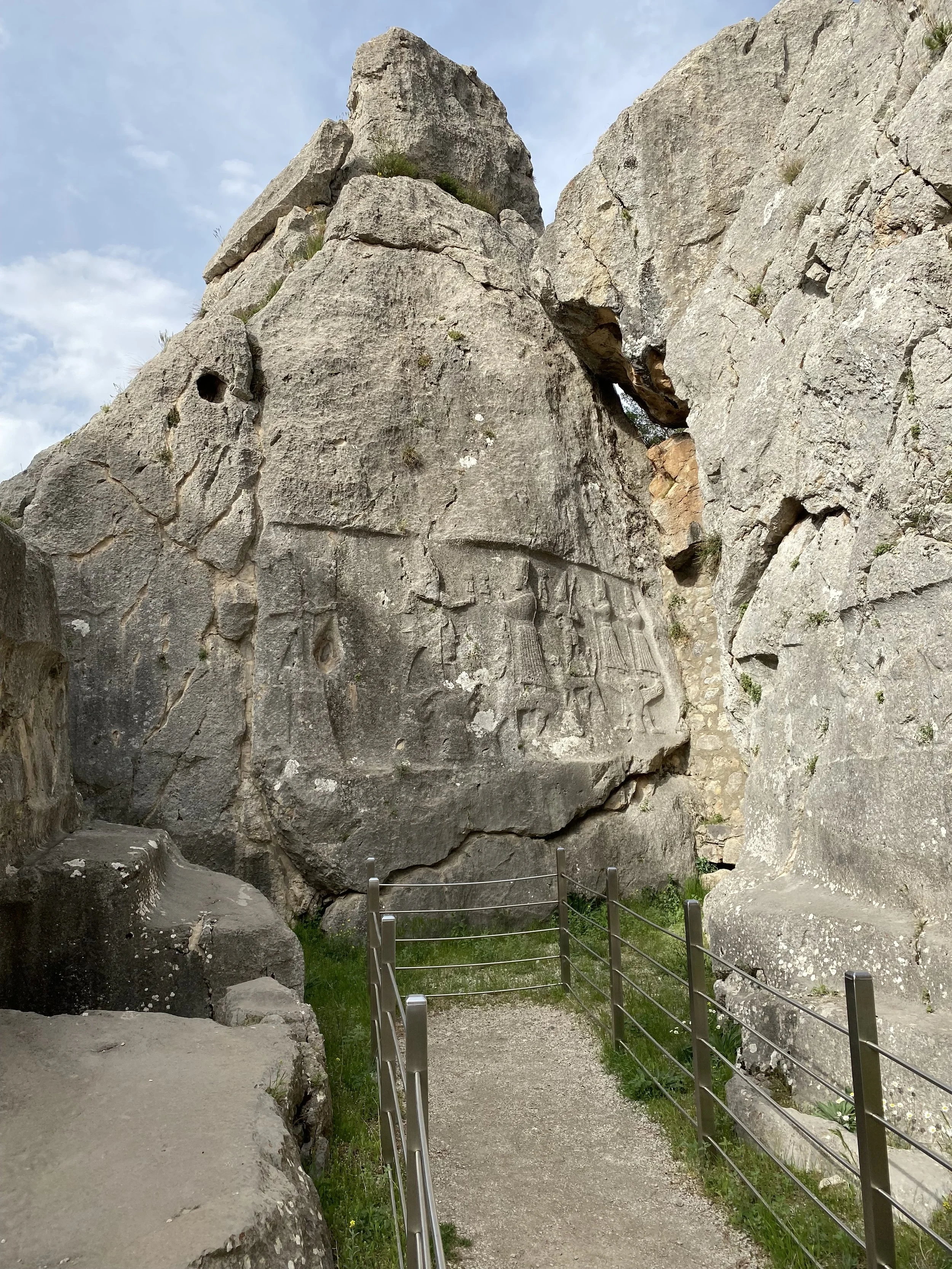
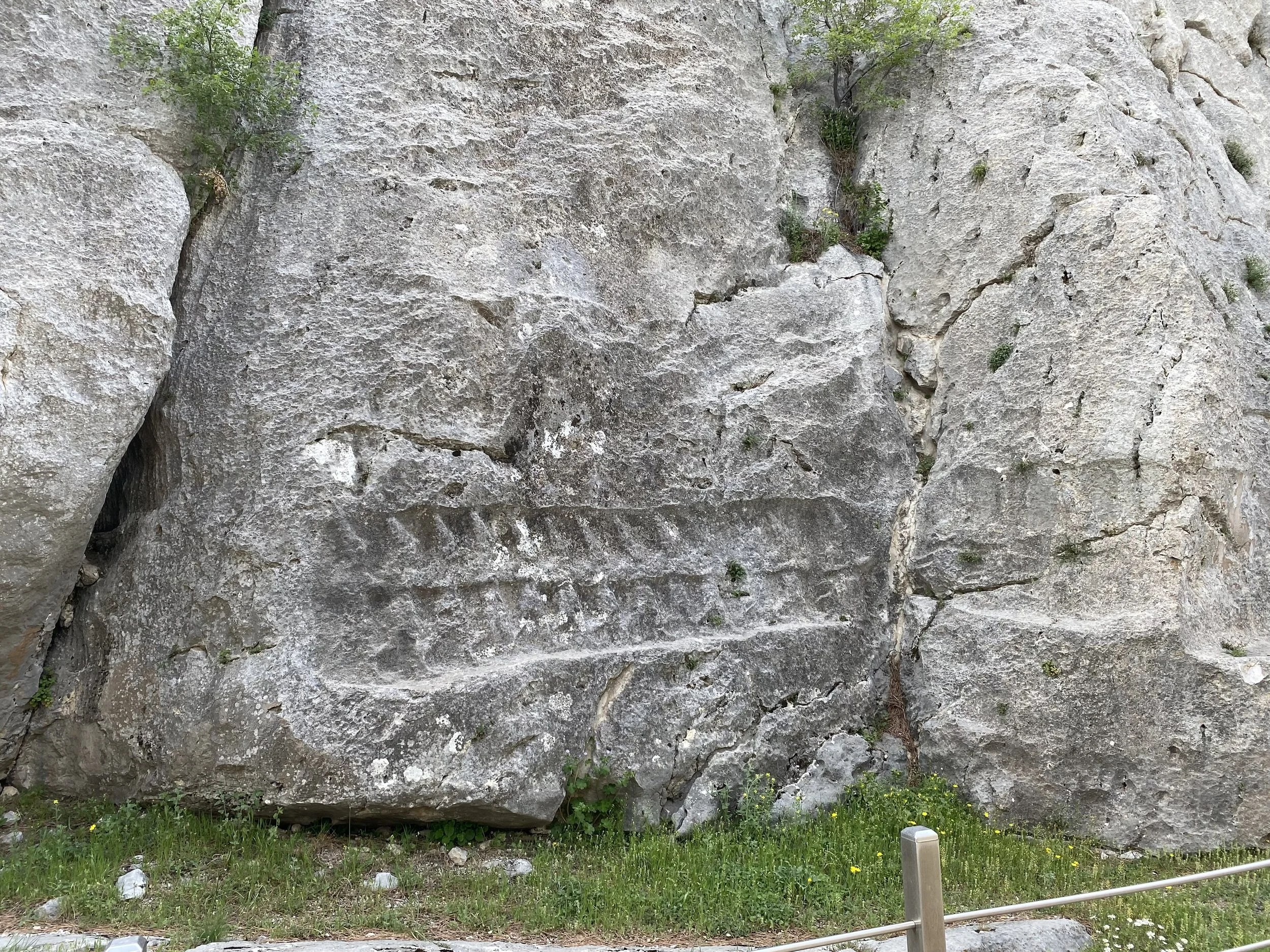
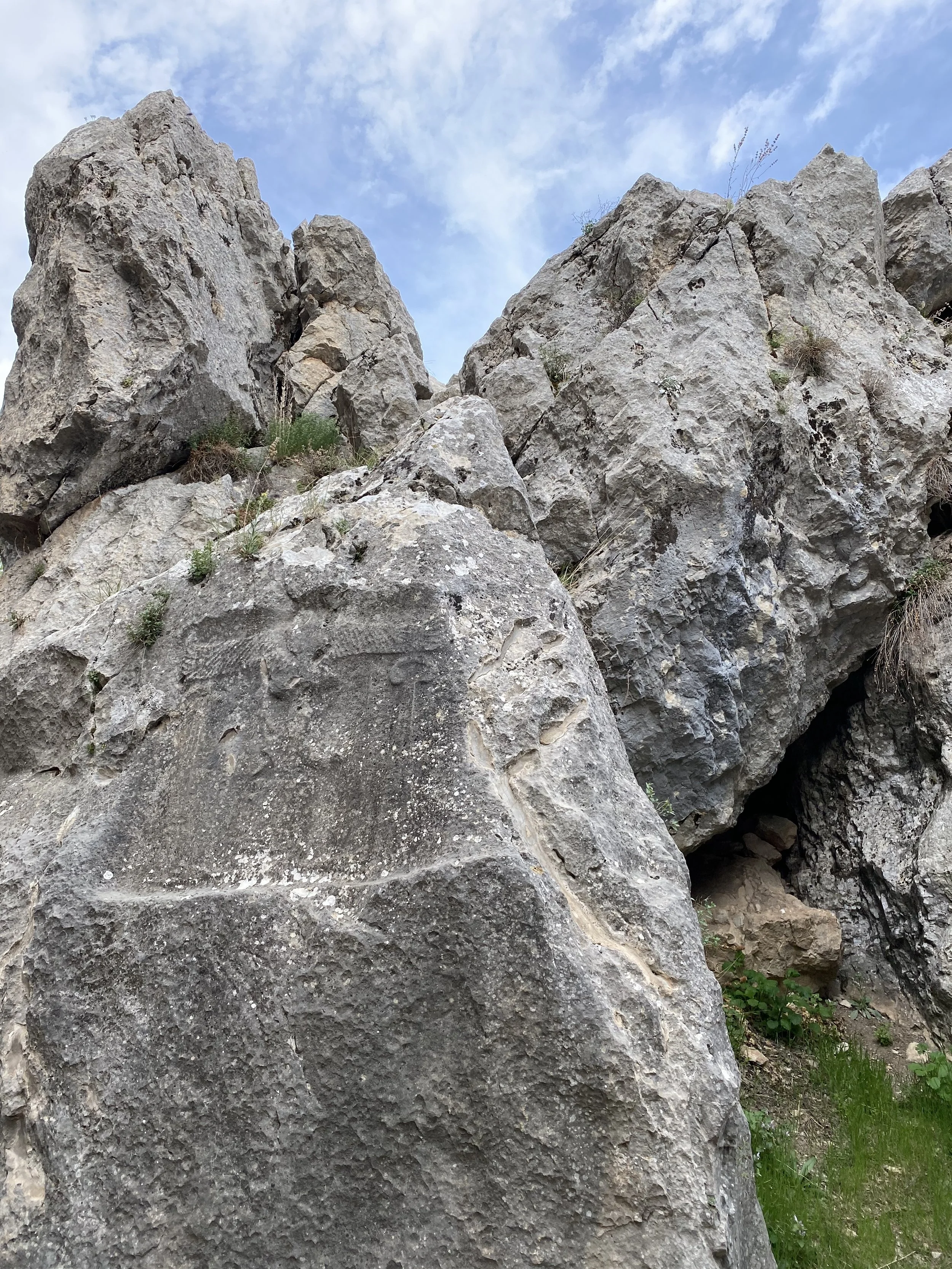
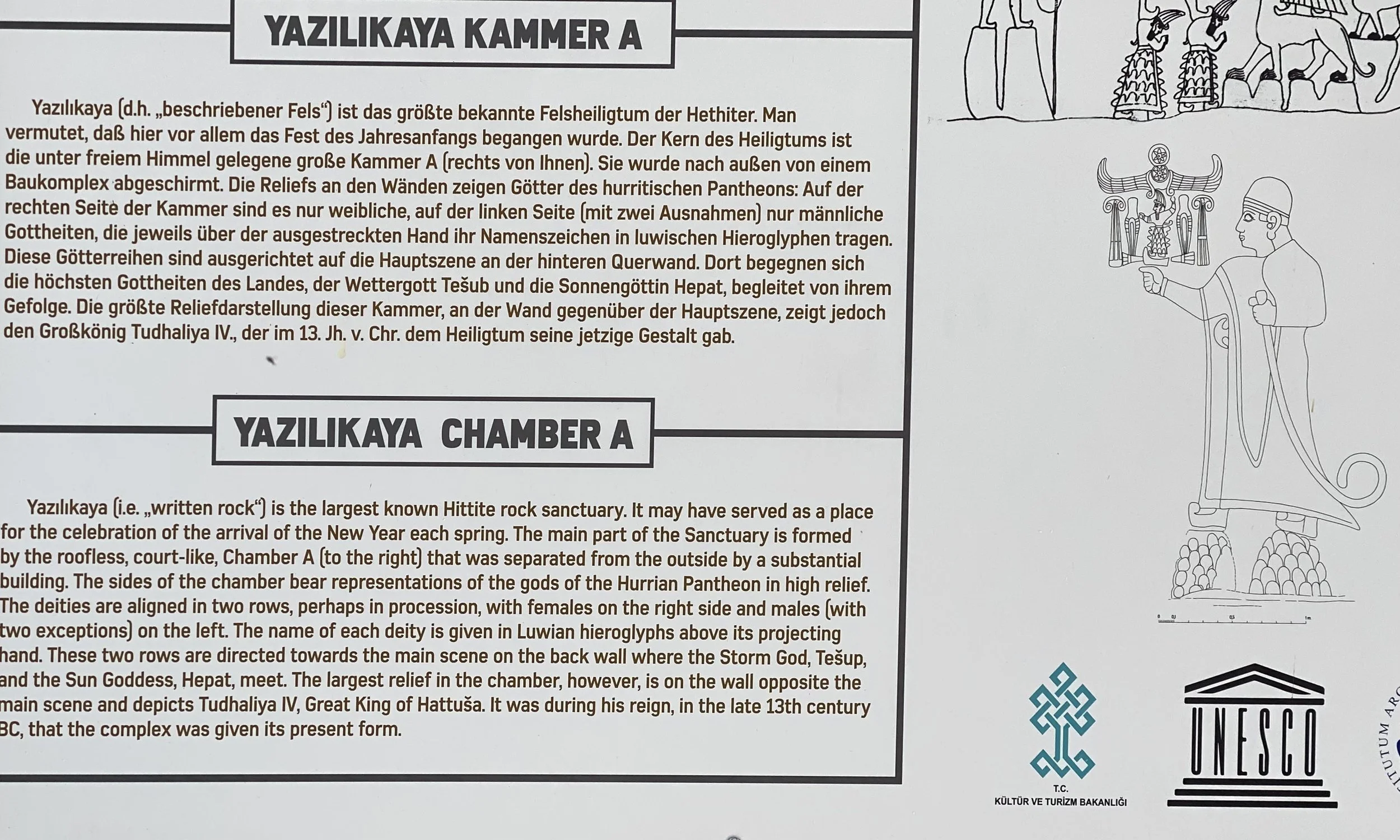
Near the ruins of Hattusa, the capital of the Hittite empire at their height mid 14th - 13th century BC, lies the Hittite open air temple of Yazilikaya. This temple was created from an outcropping of rocks. Around 1300 BC many intricate carvings were worked into these rock to celebrate and worship the Hittite gods and to tell their stories.
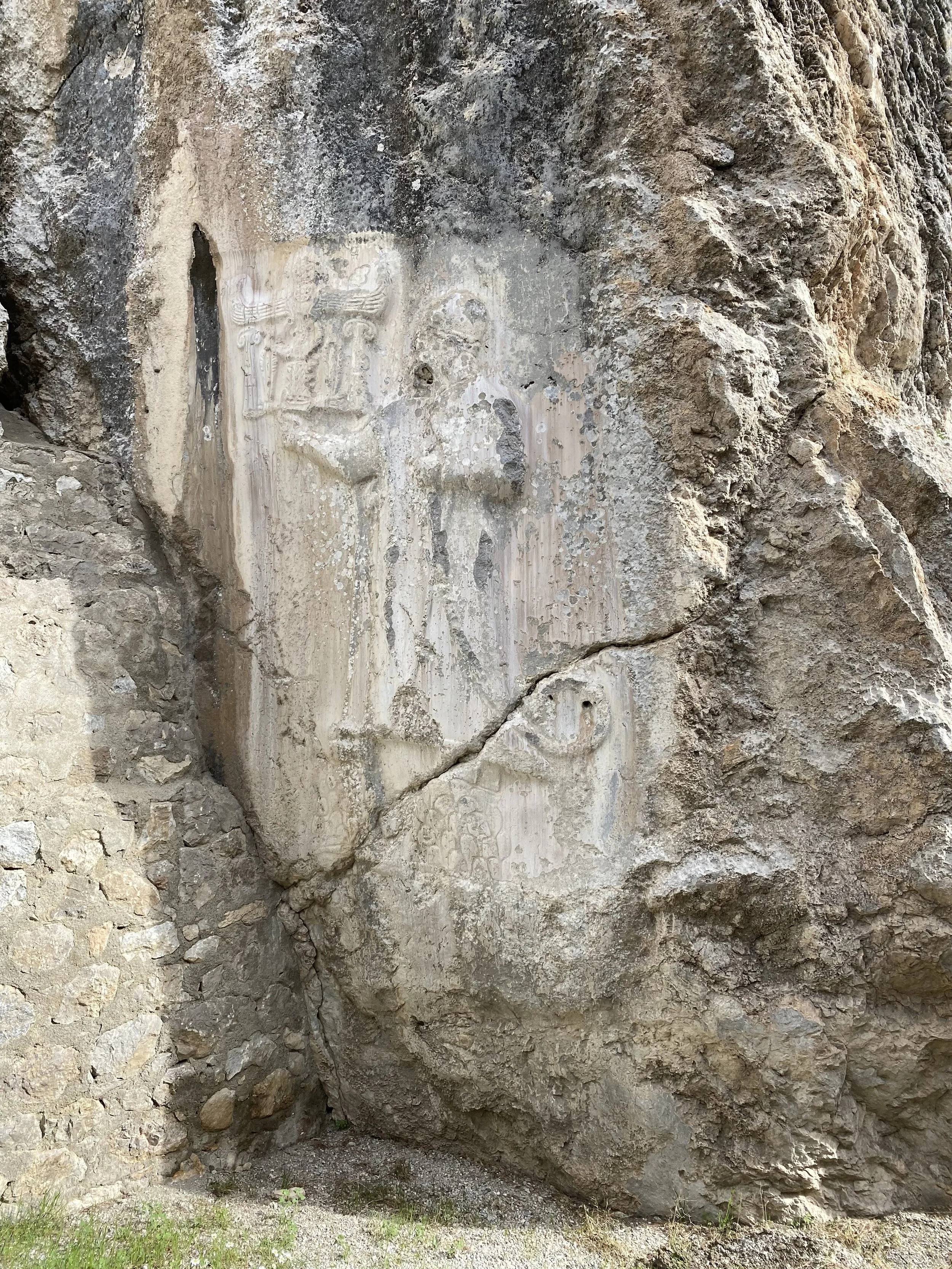
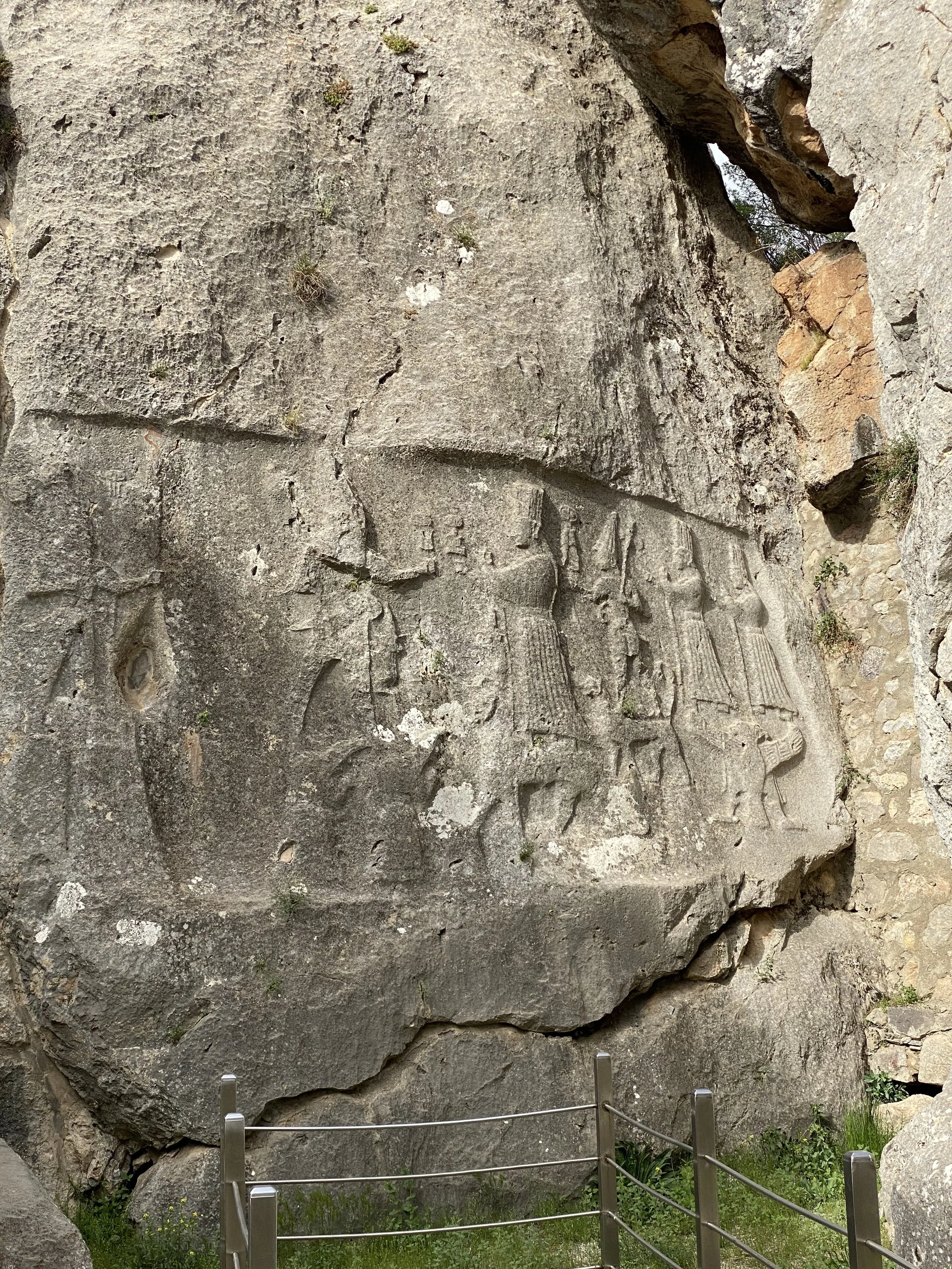
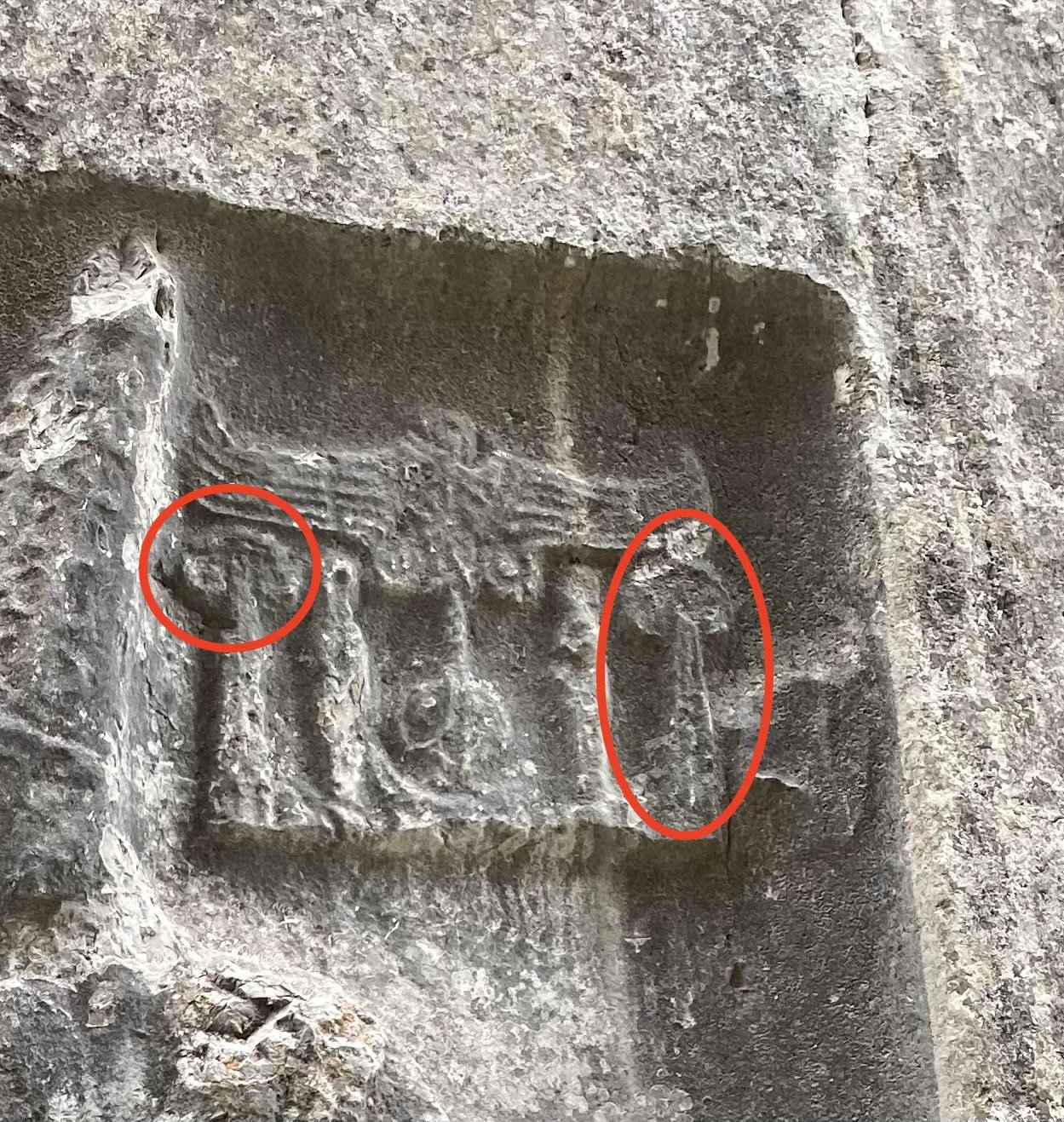
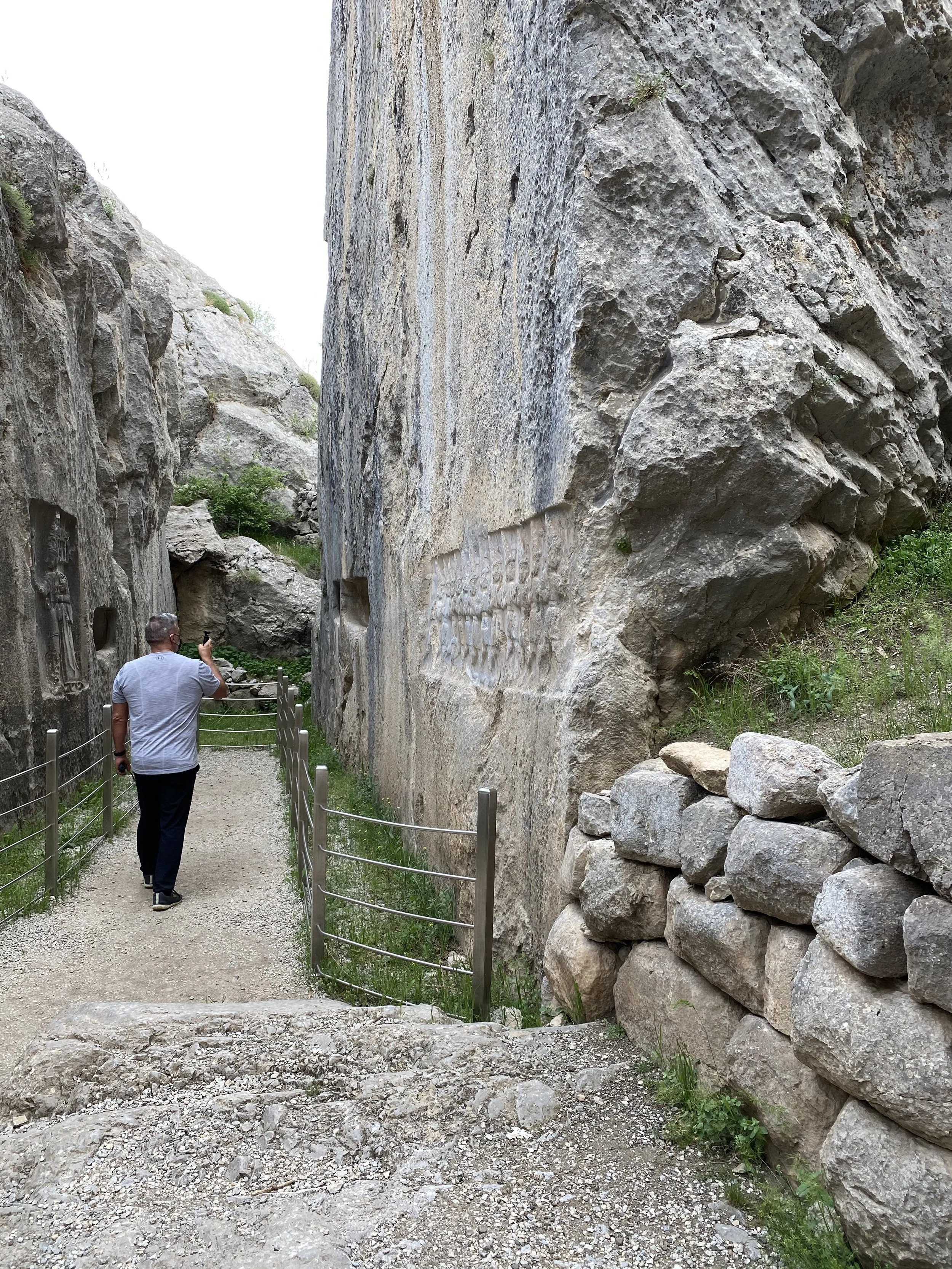
As you walk into the first “gallery” (a pathway between two large rock walls), there are carving of a line of up of marching male gods on the left and female gods on the right. They are marching toward the rock wall at the end of the path and a massive carving of the main gods. The back wall depicts the sky or storm god Teshub and his partner the sun god Hepat. Teshub is stepping on the shoulder and heads of two mountain gods with his sacred bull at his feet. His wife Hepati s standing on a panther and behind her is their son, the god Sharrumma. The more important the god, the more horns are depicted on their conical hat.
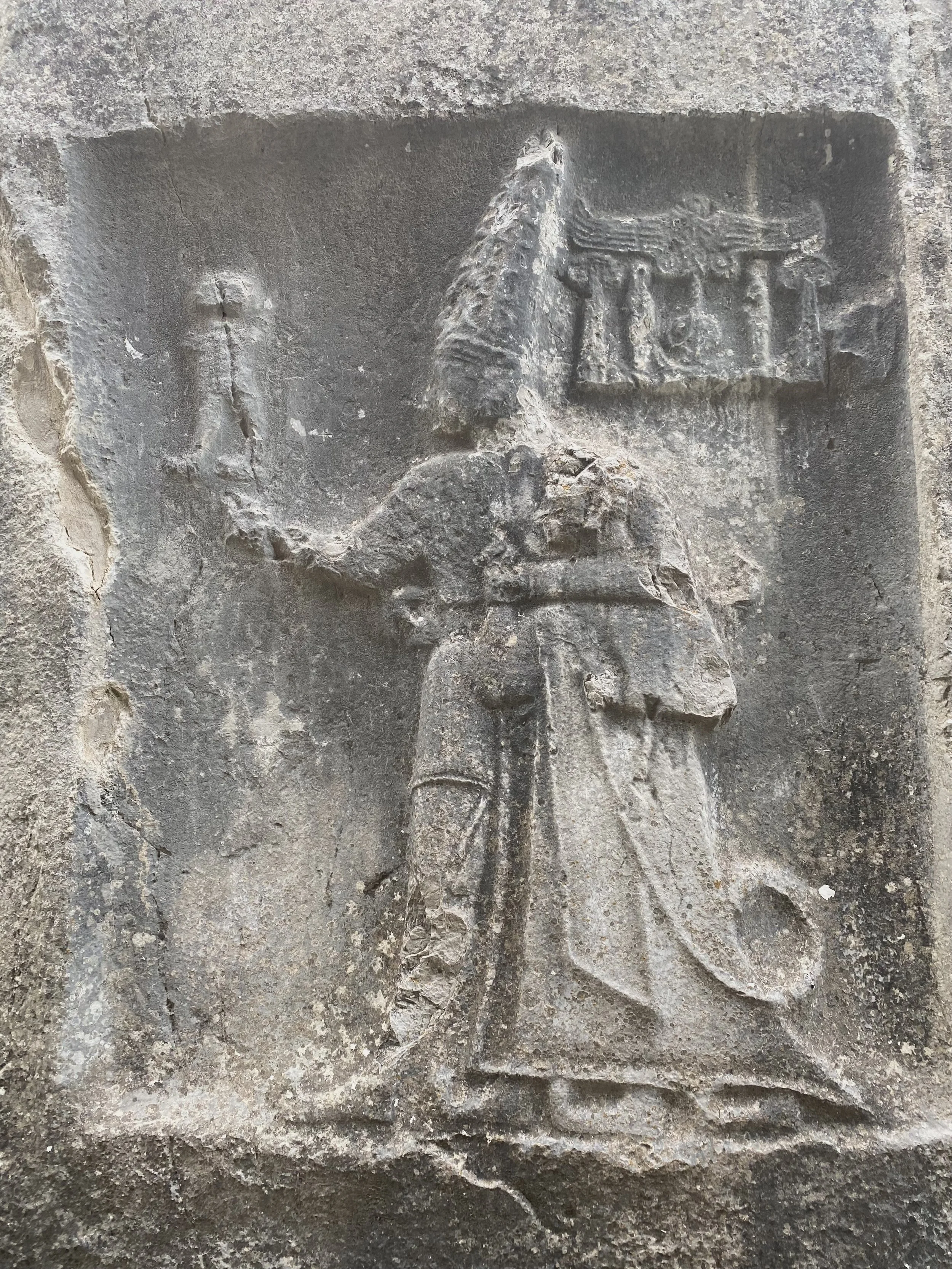
In the second gallery there is carving of Sharrumma holding the Hittite King Tudhaliya as if guarding him. Luwian hieroglyphic carvings named many of the gods in the temple area.
Walking through the galleries makes one wonder about how terrifying life must have been at times - relying on many dozens of “gods” who were not necessarily benevolent to protect you from poorly understood and terrifying effects of nature. I wonder if any of the “Hittite women of the land” that Rebecca lamented may have come to know the one true God through their patriarchal in-laws!?
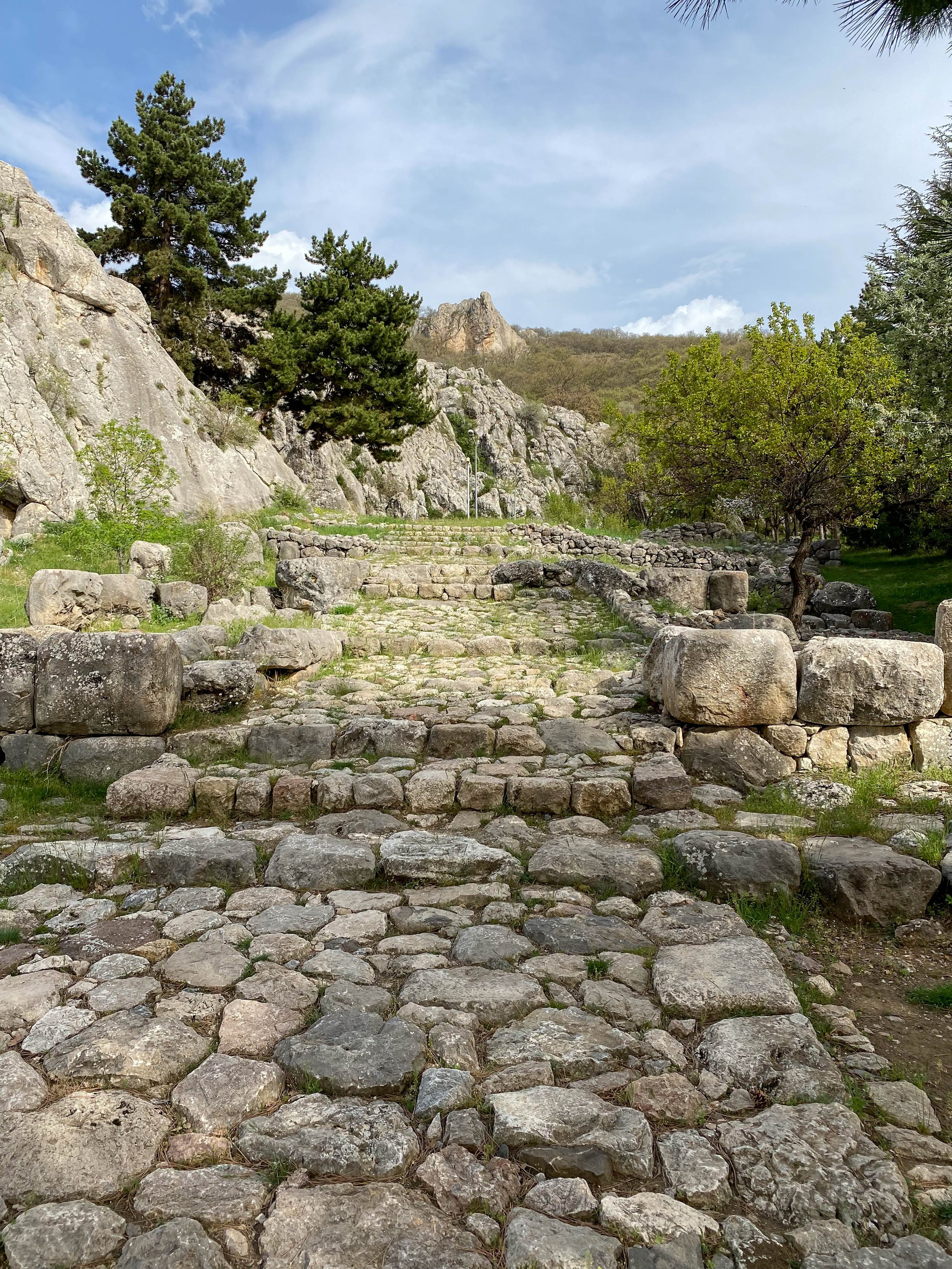
Steps leading up to the open air Hittite temple of Yazilikaya, dating to the 1300’s BC.