Magdala and the Magdala Stone
“…And they all ate and were satisfied. And they took up seven baskets full of the broken pieces left over. Those who ate were four thousand men, besides women and children. After Jesus had sent the crowd away, he got into the boat and went to the region of Magadan” Matthew 15:39
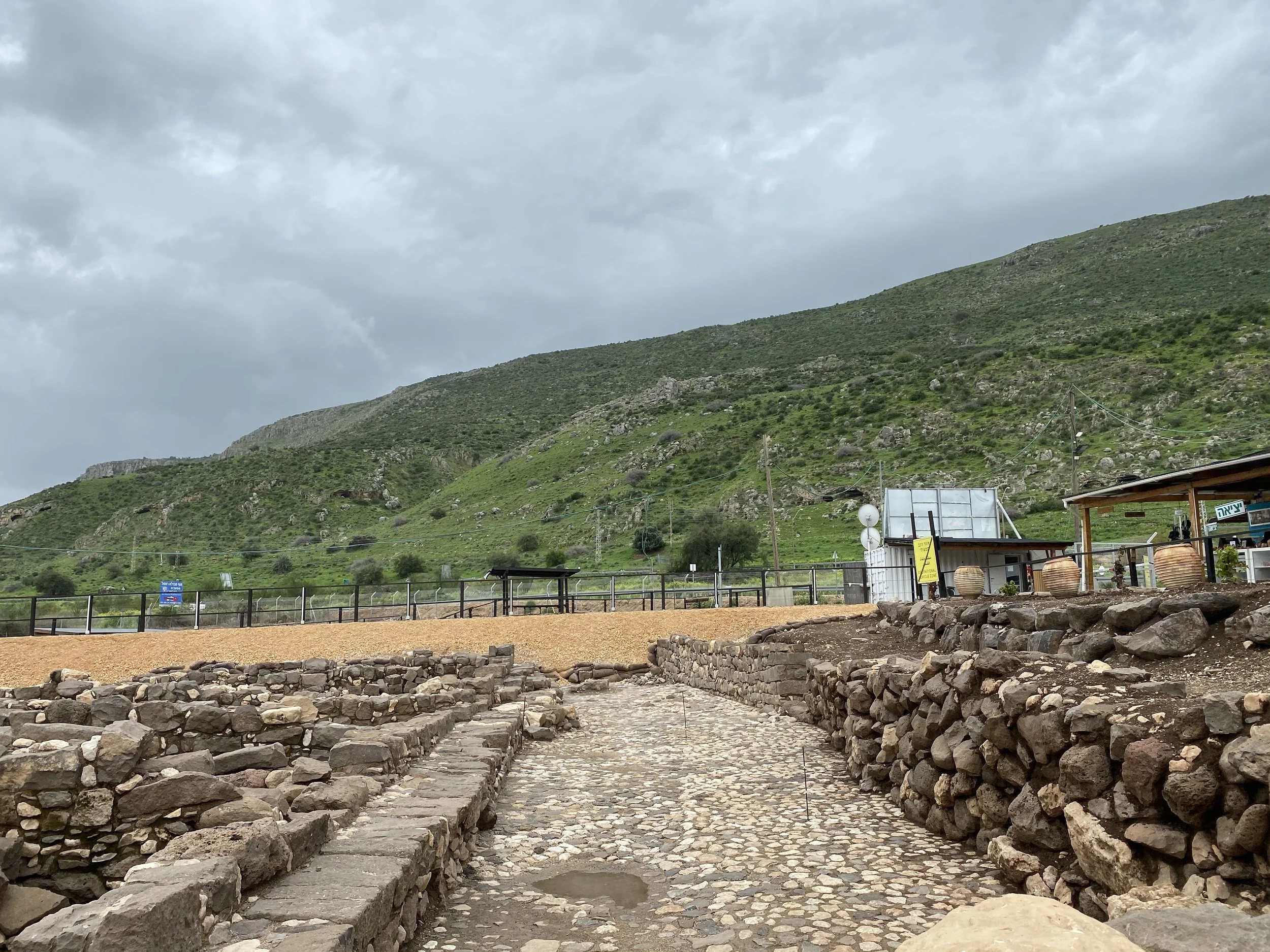
The Biblical region of Magadan is associated with Magdala, a Biblical town on the western shore of Galilee. Archeology has found that the village was settled since the 3rd century BC. It was a Roman outpost in the late 1st century BC to mid 1st century AD. Nearby TIberius became a more important Roman town when founded by Herod Antipas. The Magdala area was also called Taricheae - a word that relates to the production of salted fish. Magdala was the site of one of the many tragic events of the Jewish revolt against Roman rule in AD 67-74. There was a sea battle between the Jews and the Romans on the Sea of Galilee here with a complete and terrible defeat of the Jews. Vespasian had 1,200 Jews killed at the stadium in Tiberias during this event and sent thousands of young Jews to Nero as prisoners and slaves. Tens of thousands more were sold as slaves.
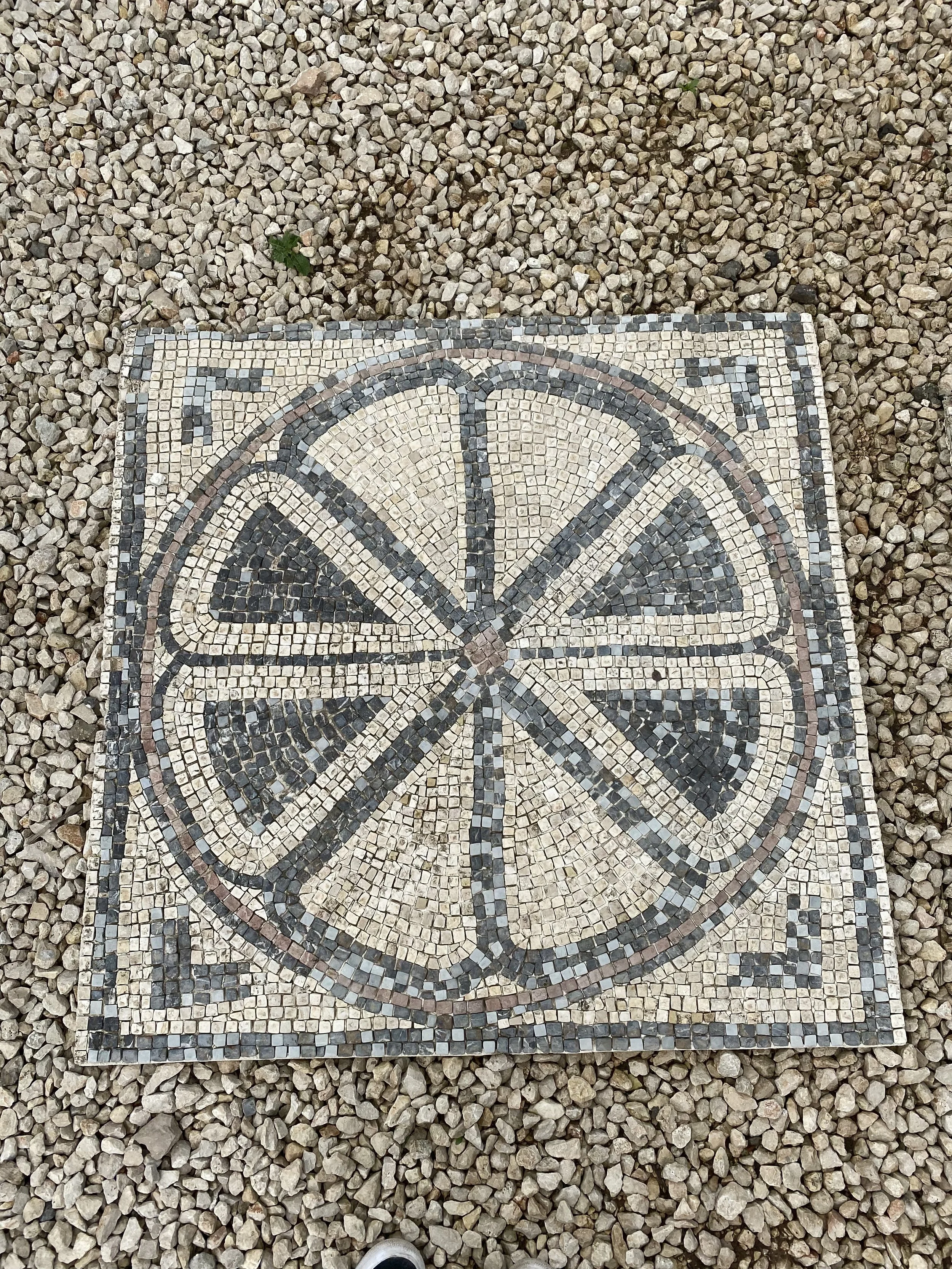
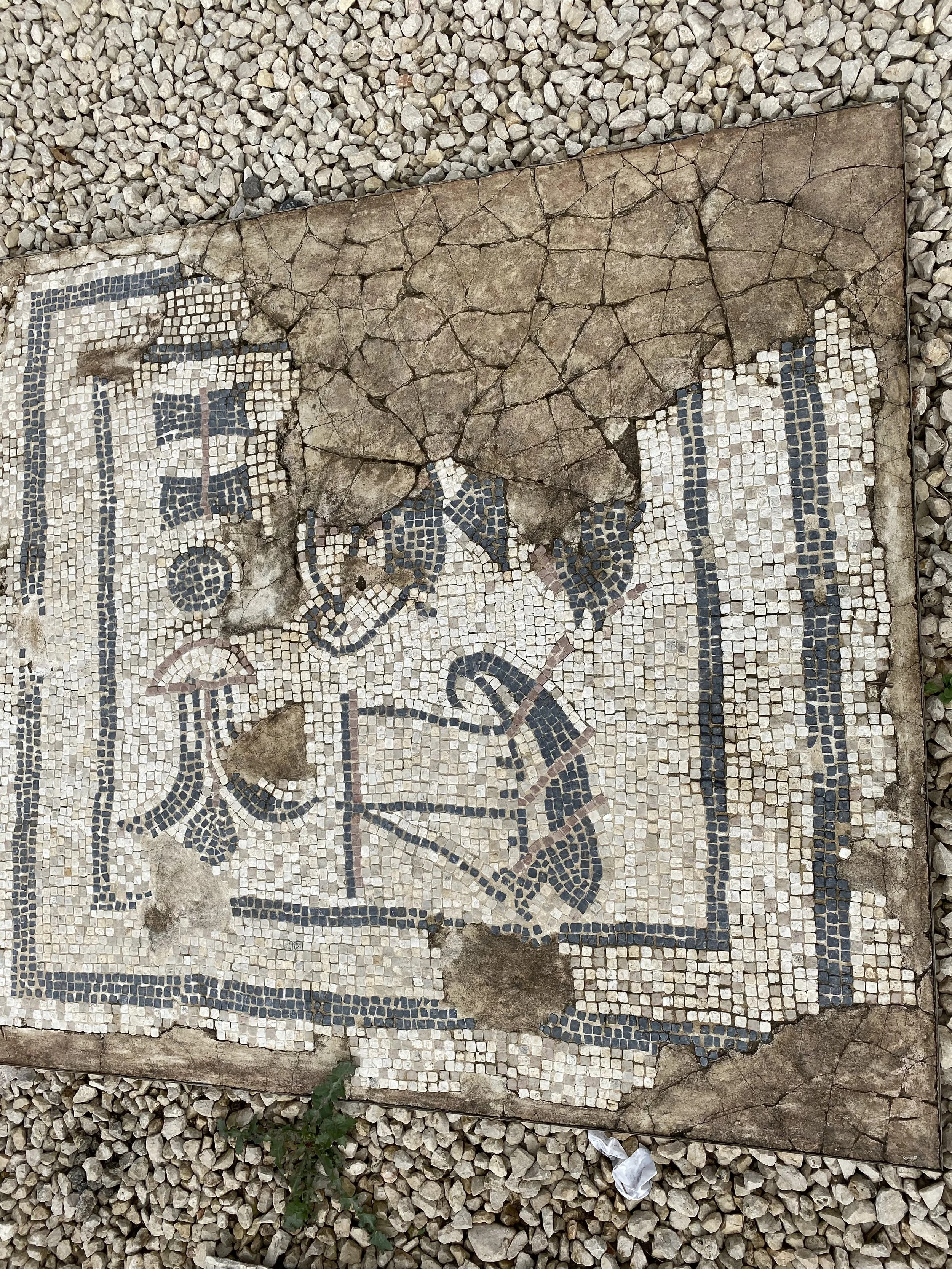
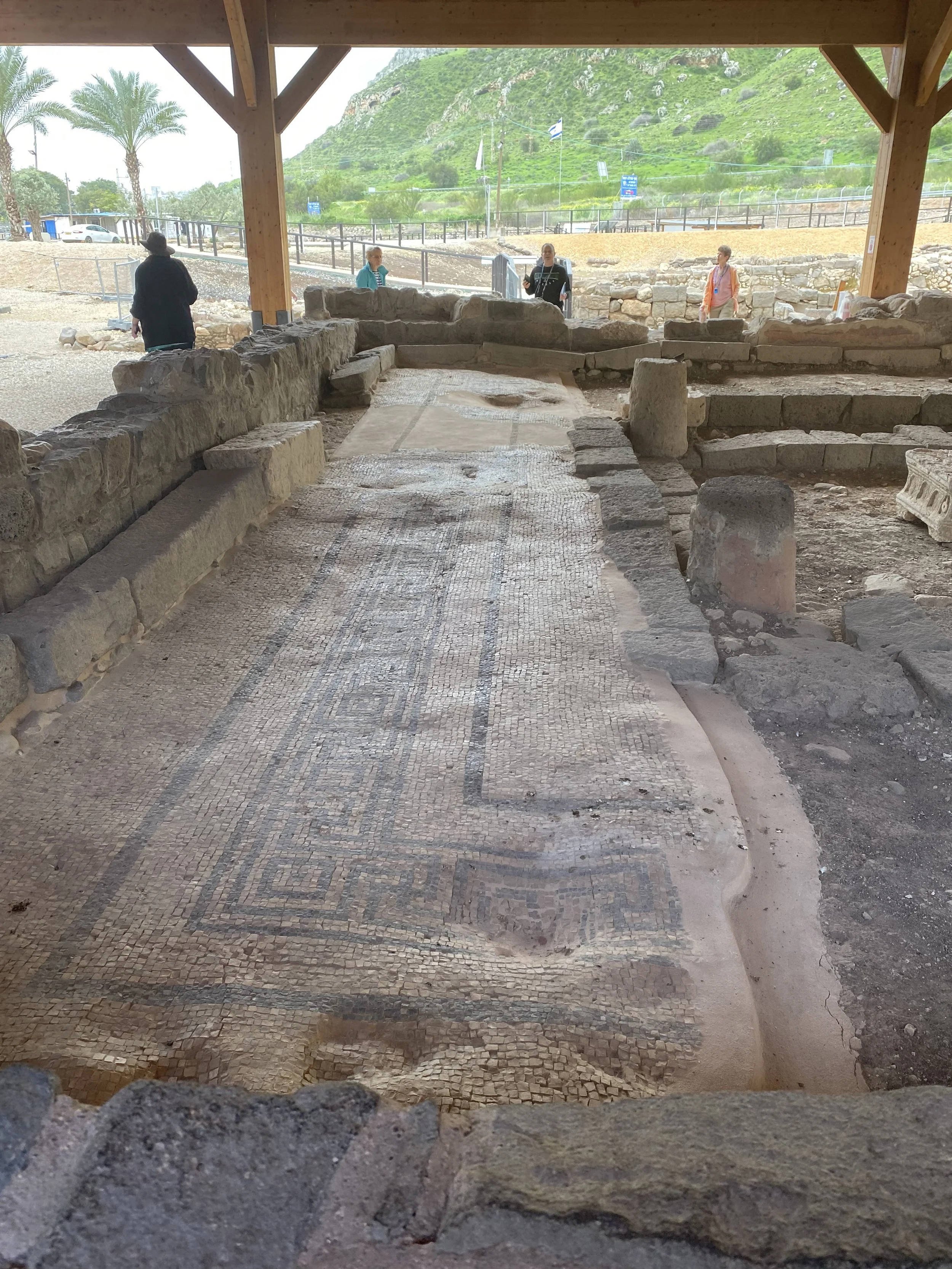
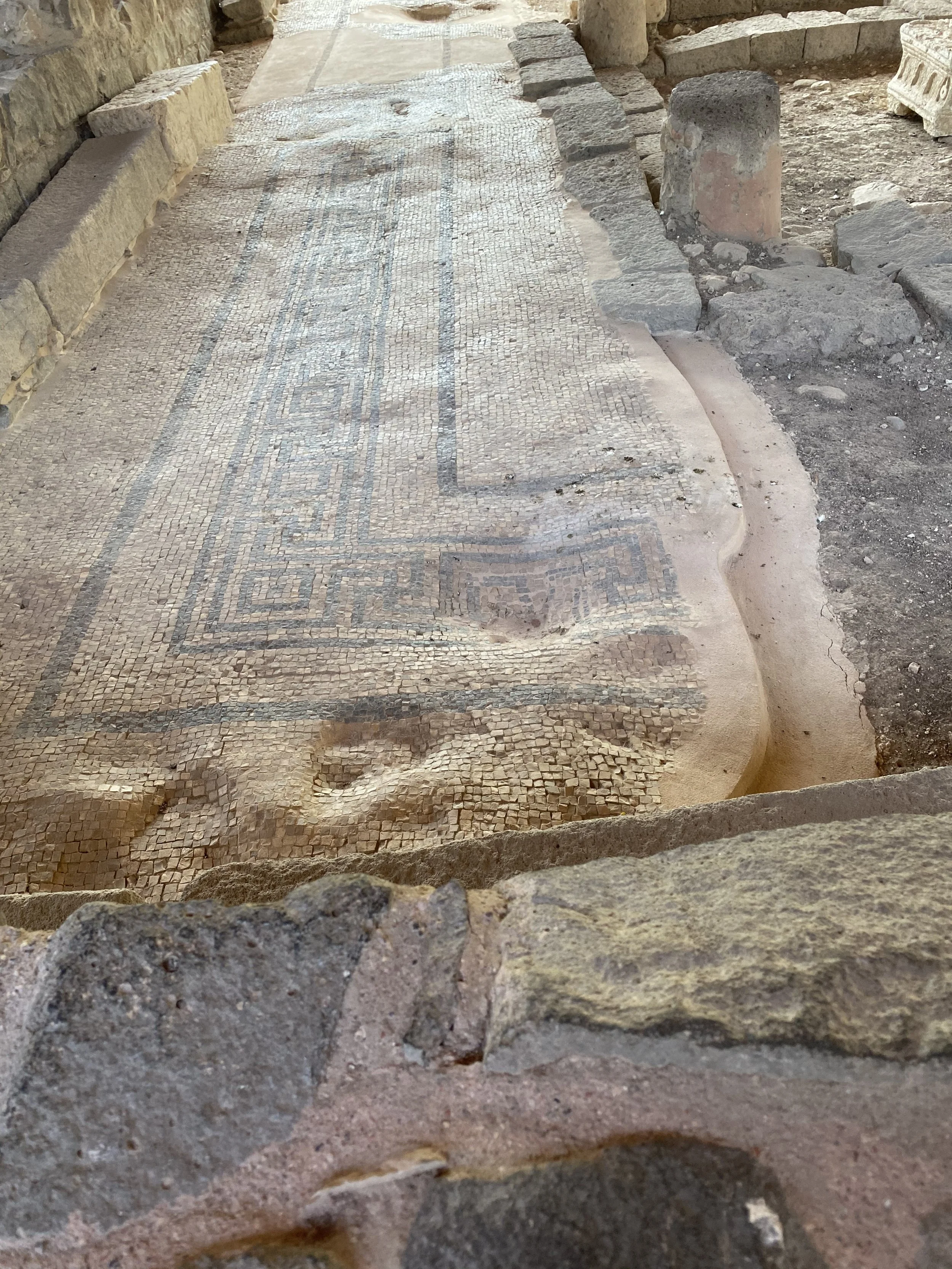
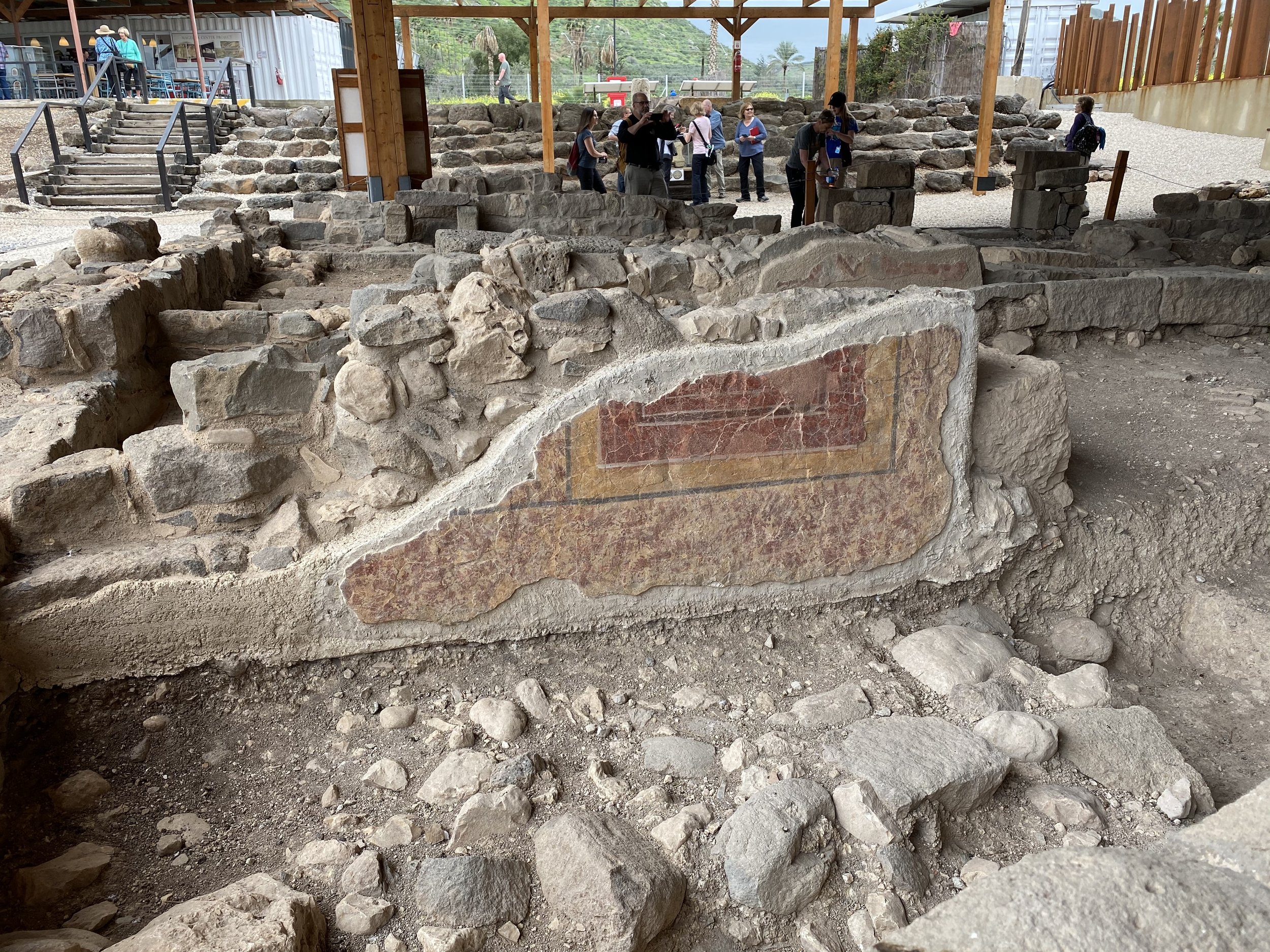
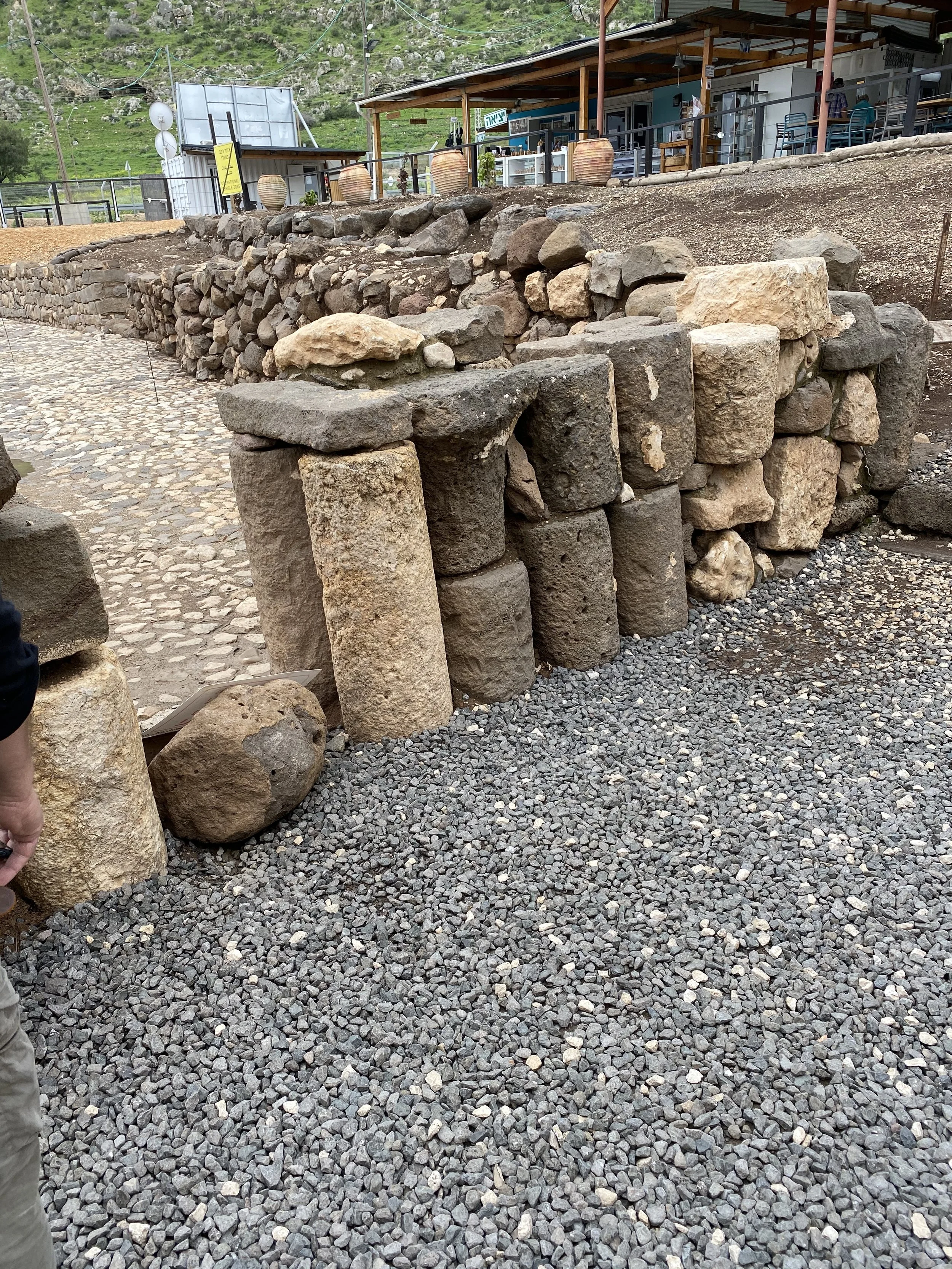
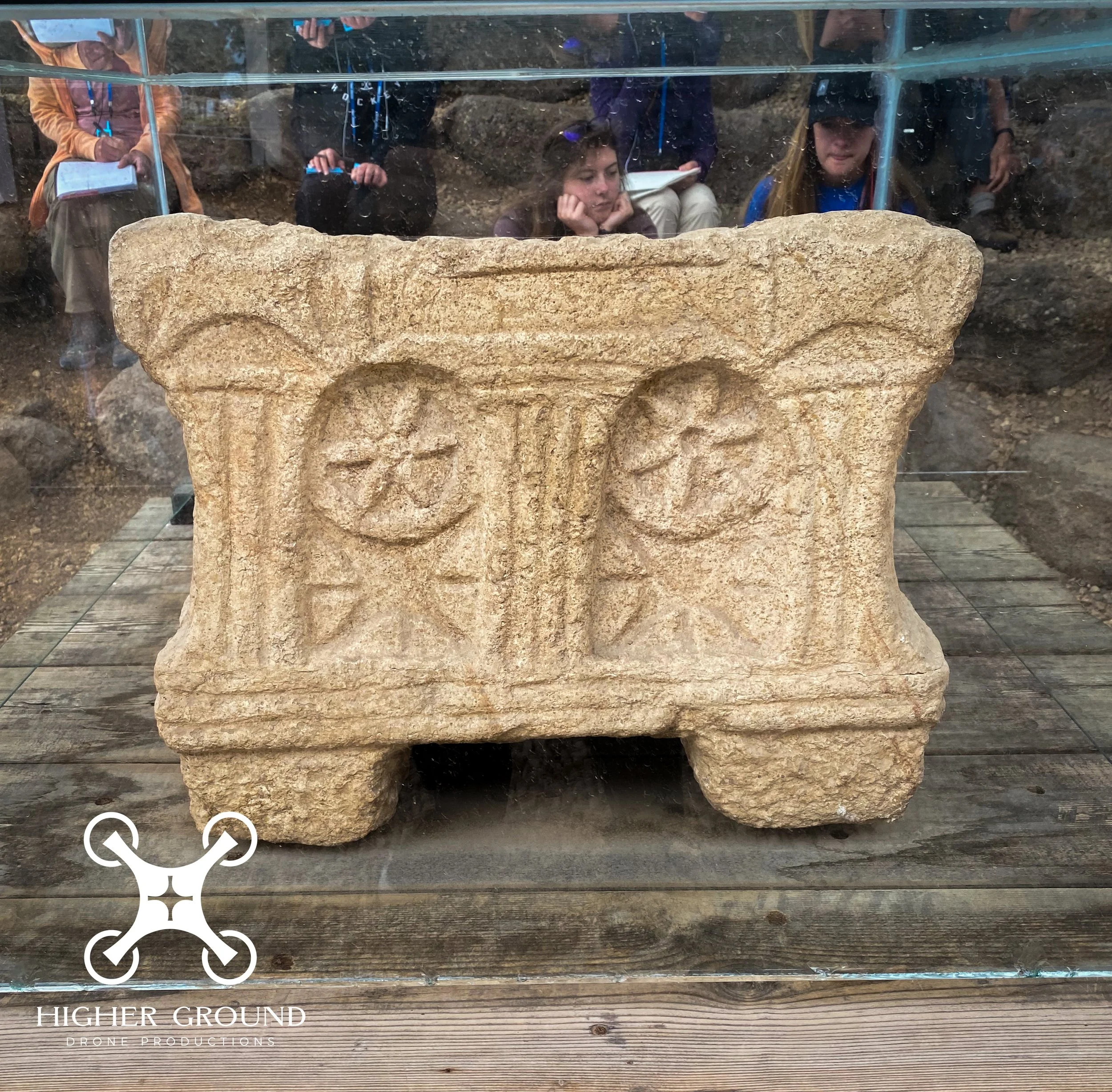
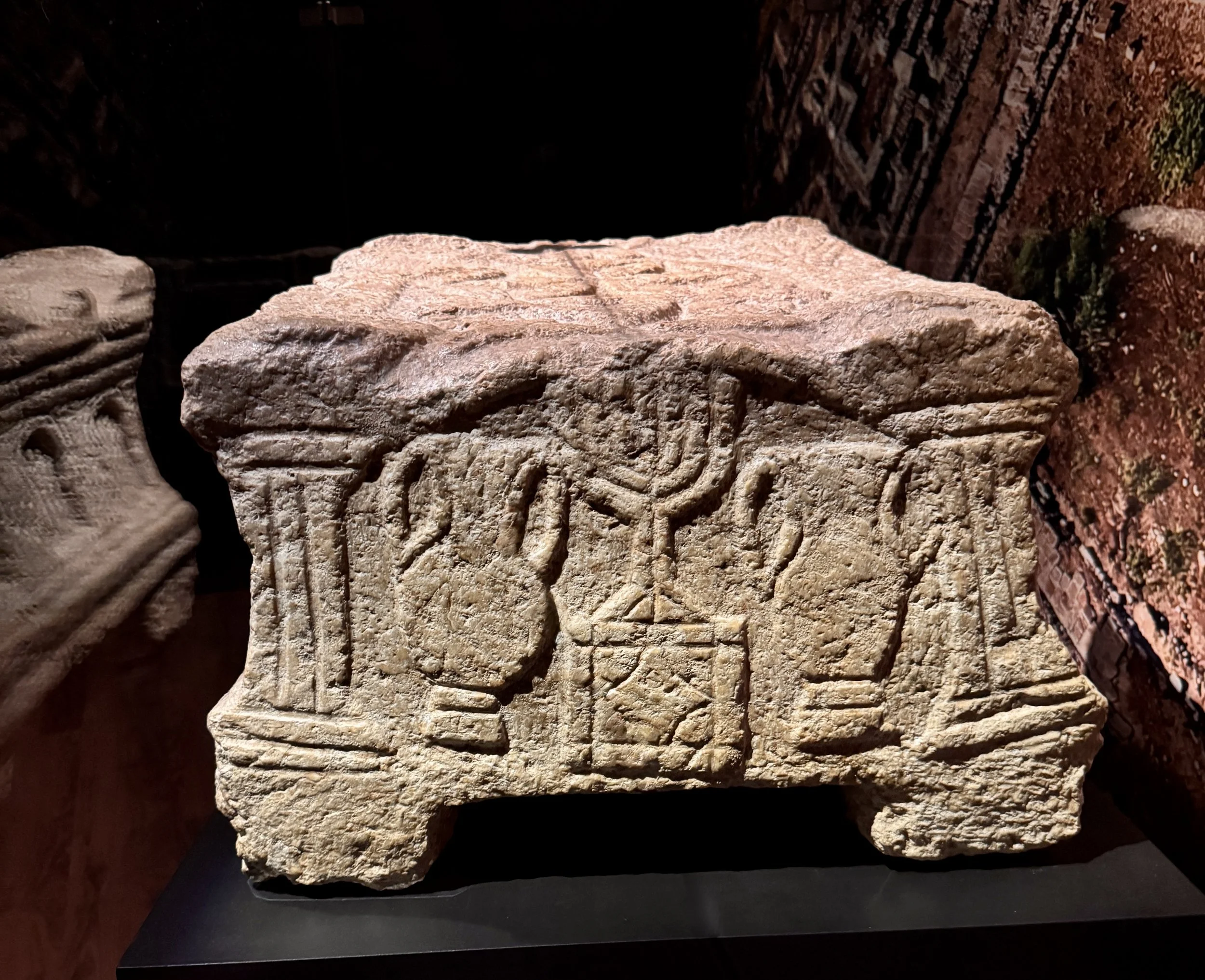
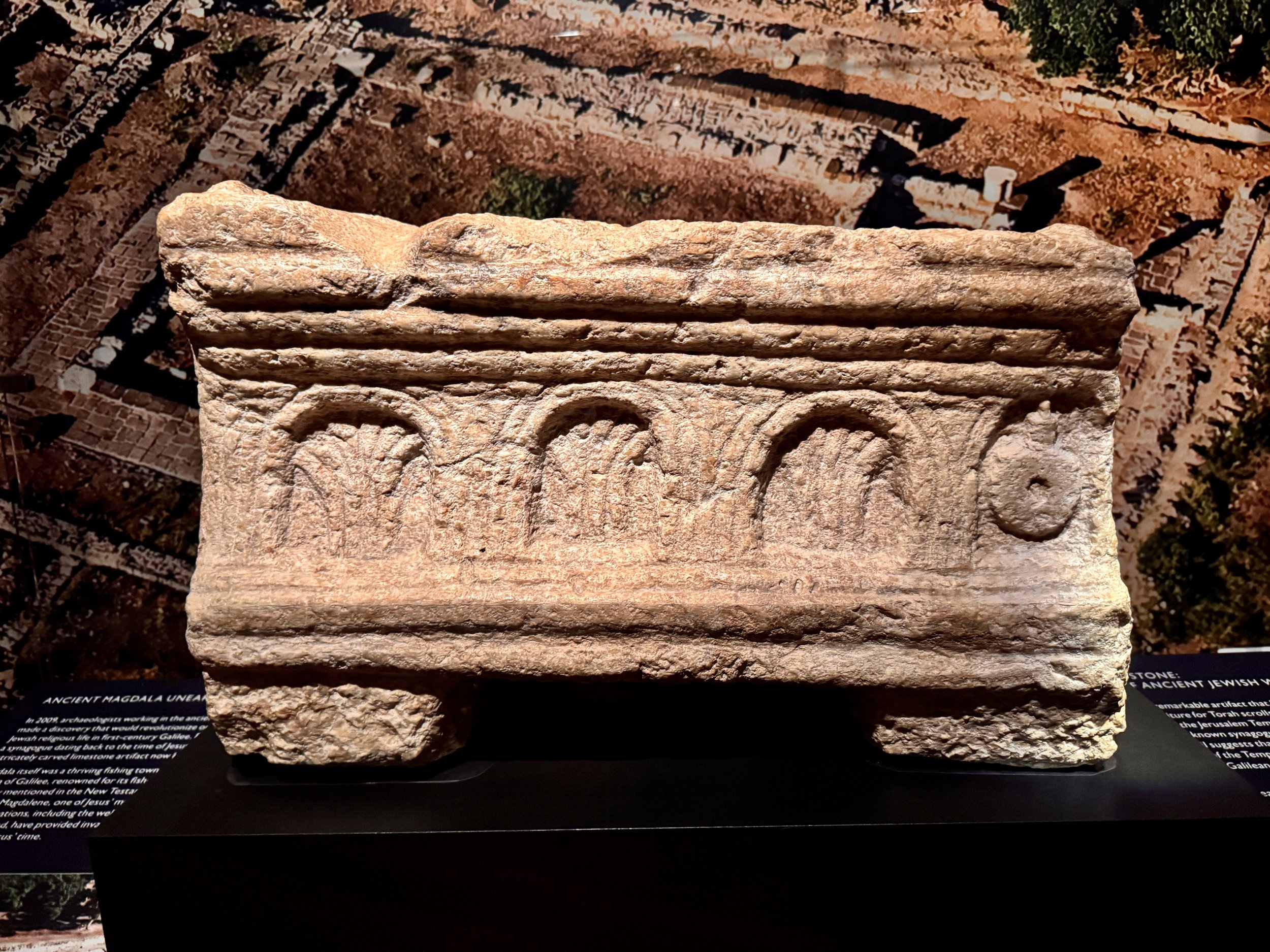
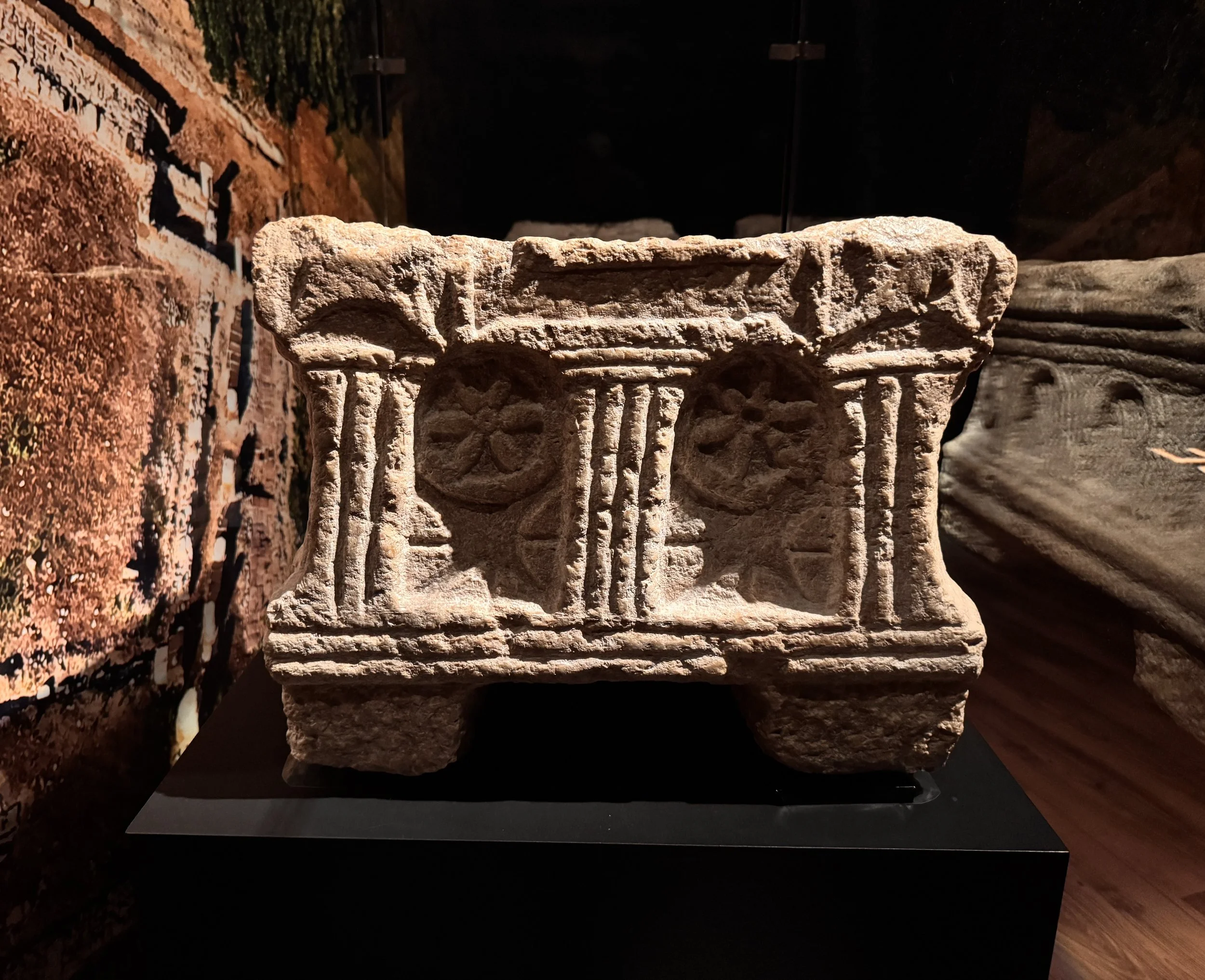
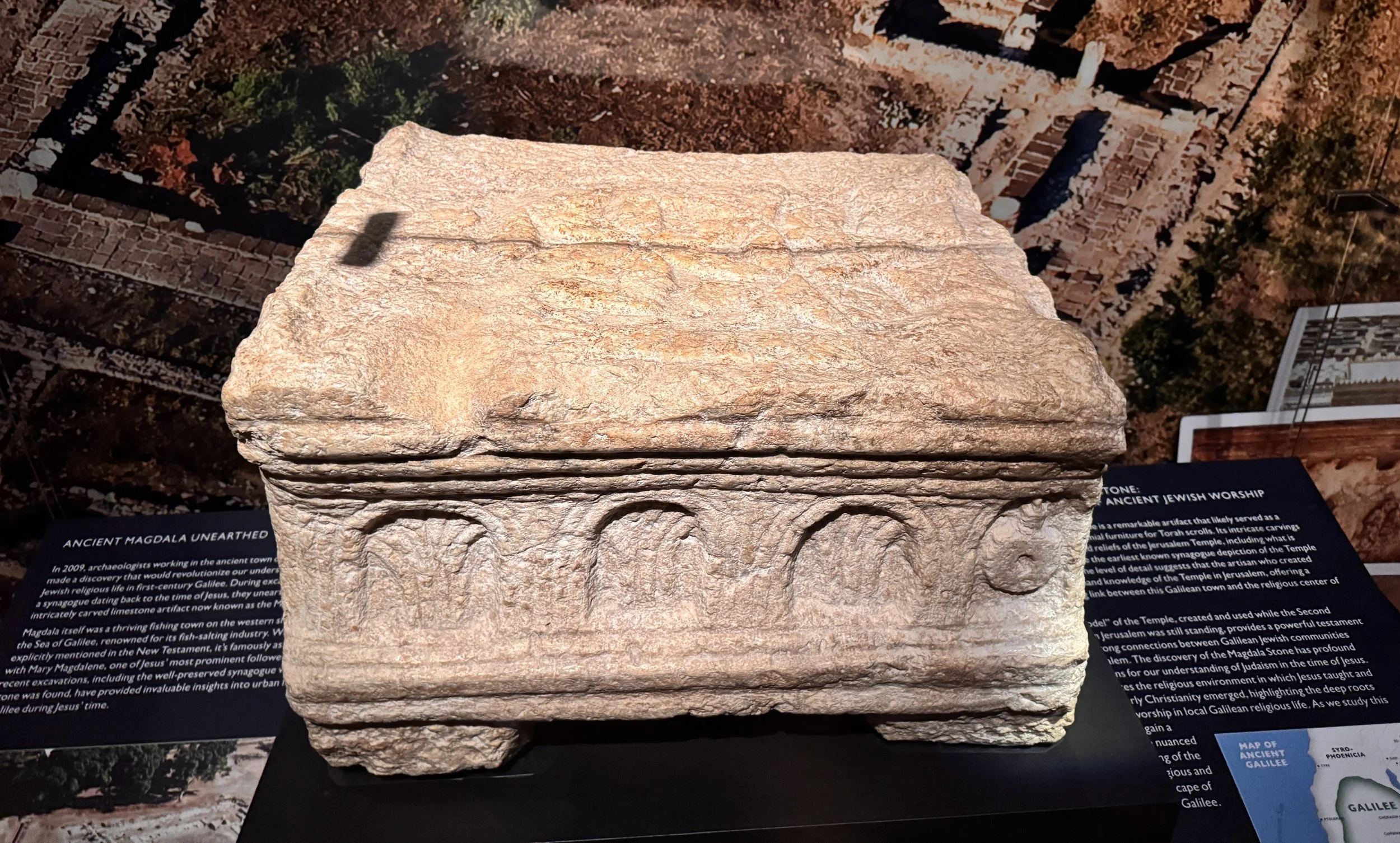
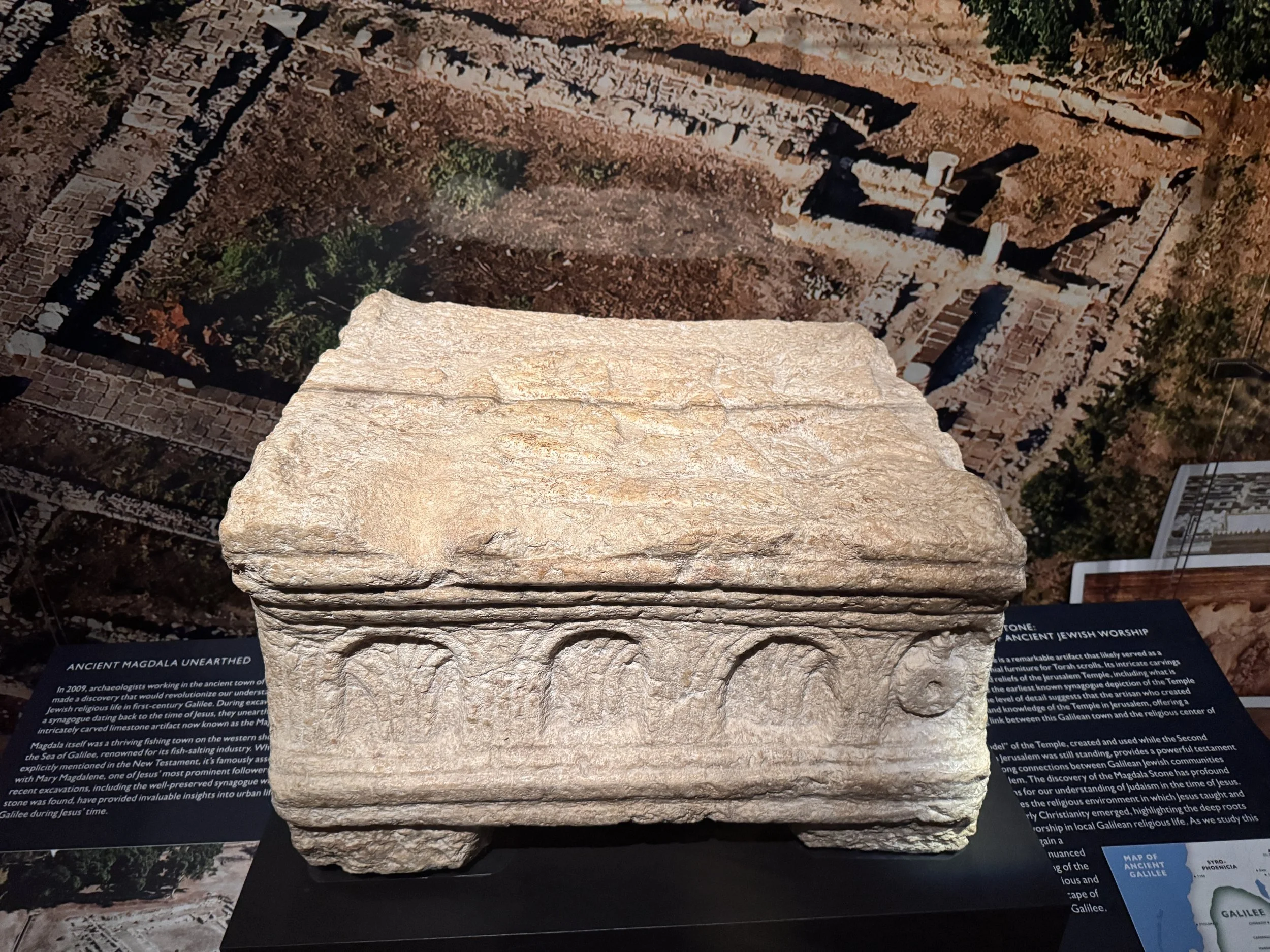
The archeological site of Magdala is notable for having one of the oldest synagogues yet found in the Galilee. A good portion of the mosaic floor is preserved. In 2009, archeologists found a carved stone block, decorated with an early depiction of the second temple menorah. Other carved imagery are thought to represent aspects of the temple (columned arches, rosettes, showbread table and chariot wheel like image). It could have served as a Torah reading table or a base for a Torah scroll shrine. The importance of this finding is that the artist likely had seen the real menorah and the temple in Jerusalem, prior to the AD 70 destruction by the Romans. Other features of the 1st century city visible at the site are a nymphaeum (monumental fountain), several mikveh (ritual baths) that were fed by natural water, a warehouse near what would have been the lakeshore. At the 1st c shoreline the remains of the baths and colonnades were for wealthy travelers.
We recently had a chance to view the actual Magdala stone at the Museum of the Bible in Washington DC, on loan from the Israel Museum. The carvings in the stone are incredibly detailed and so amazing to have survived intact to give a glimpse of the connection between the Jewish people, their synagogue and the temple at the time of Jesus.
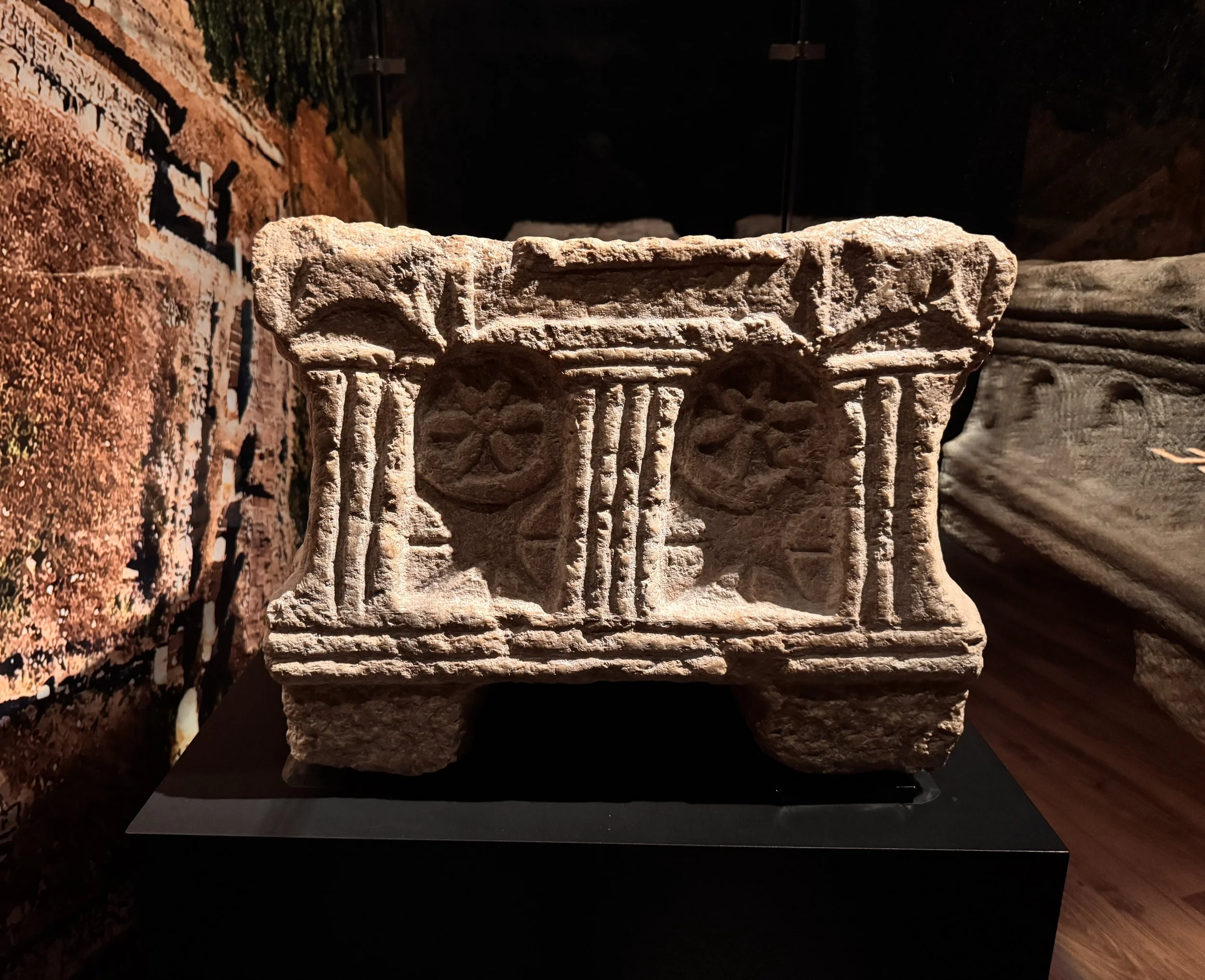
The Magdala stone from a 1st c synagogue at Magdala on the Sea of Galilee. The stone was used as a Torah table or base or the base of a Torah shrine and is decorated to reflect the temple in Jerusalem. The stone is on loan from the Israel Museum to the Museum of the Bible in Washington DC.