Dead Sea Scrolls of Qumran
“Your word is a lamp to my feet and a light to my path.” Psalm 119:105
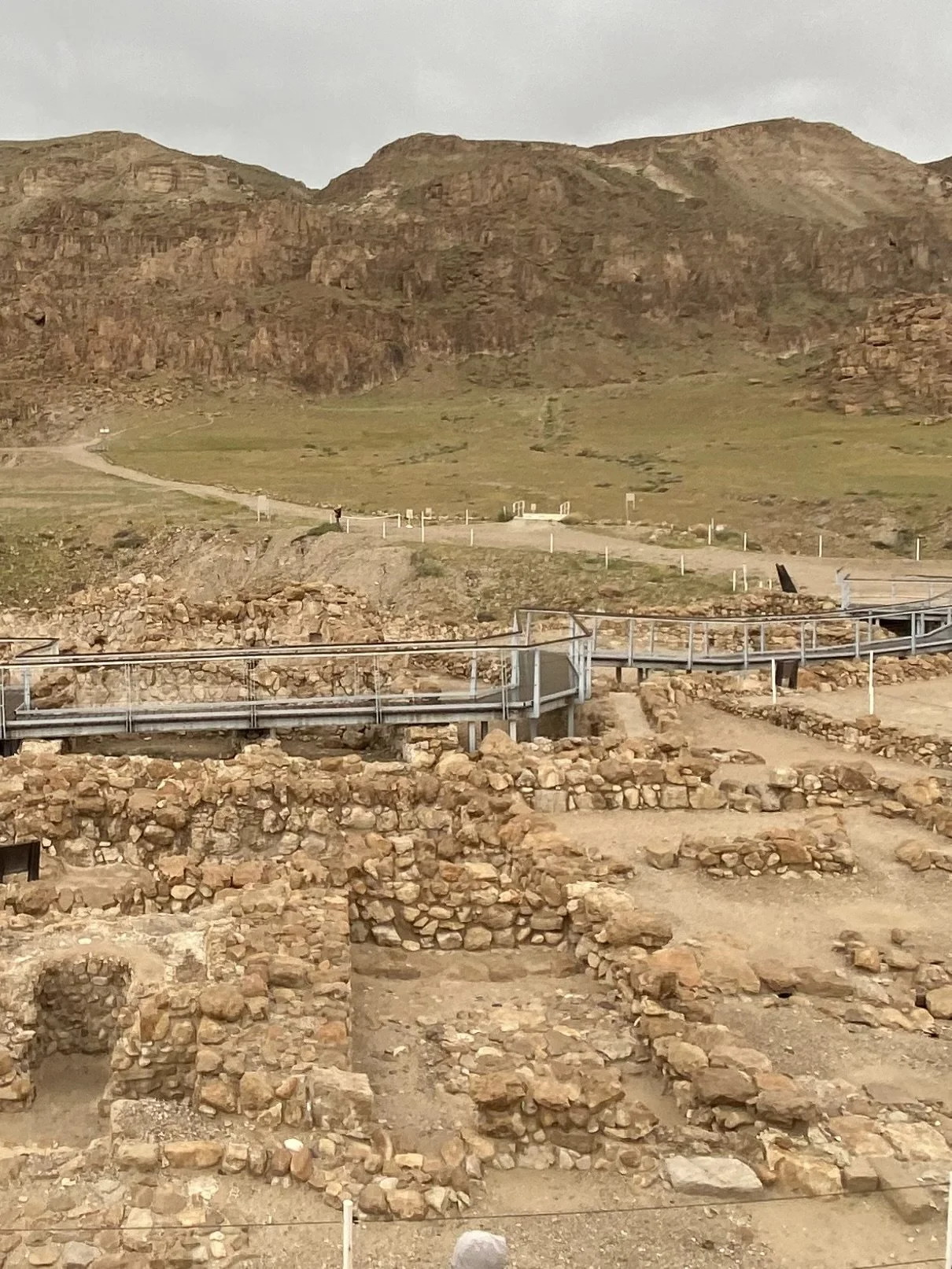
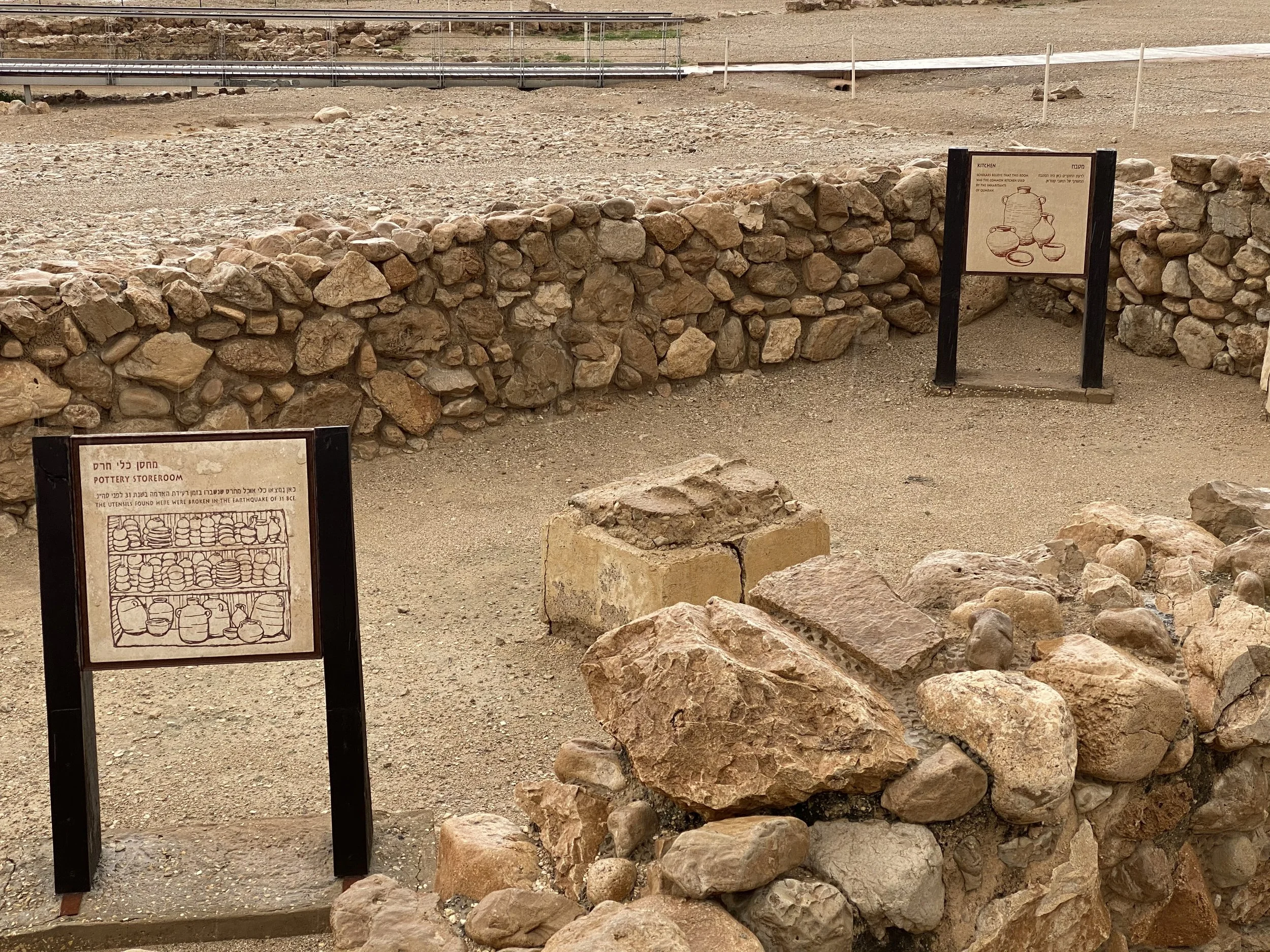
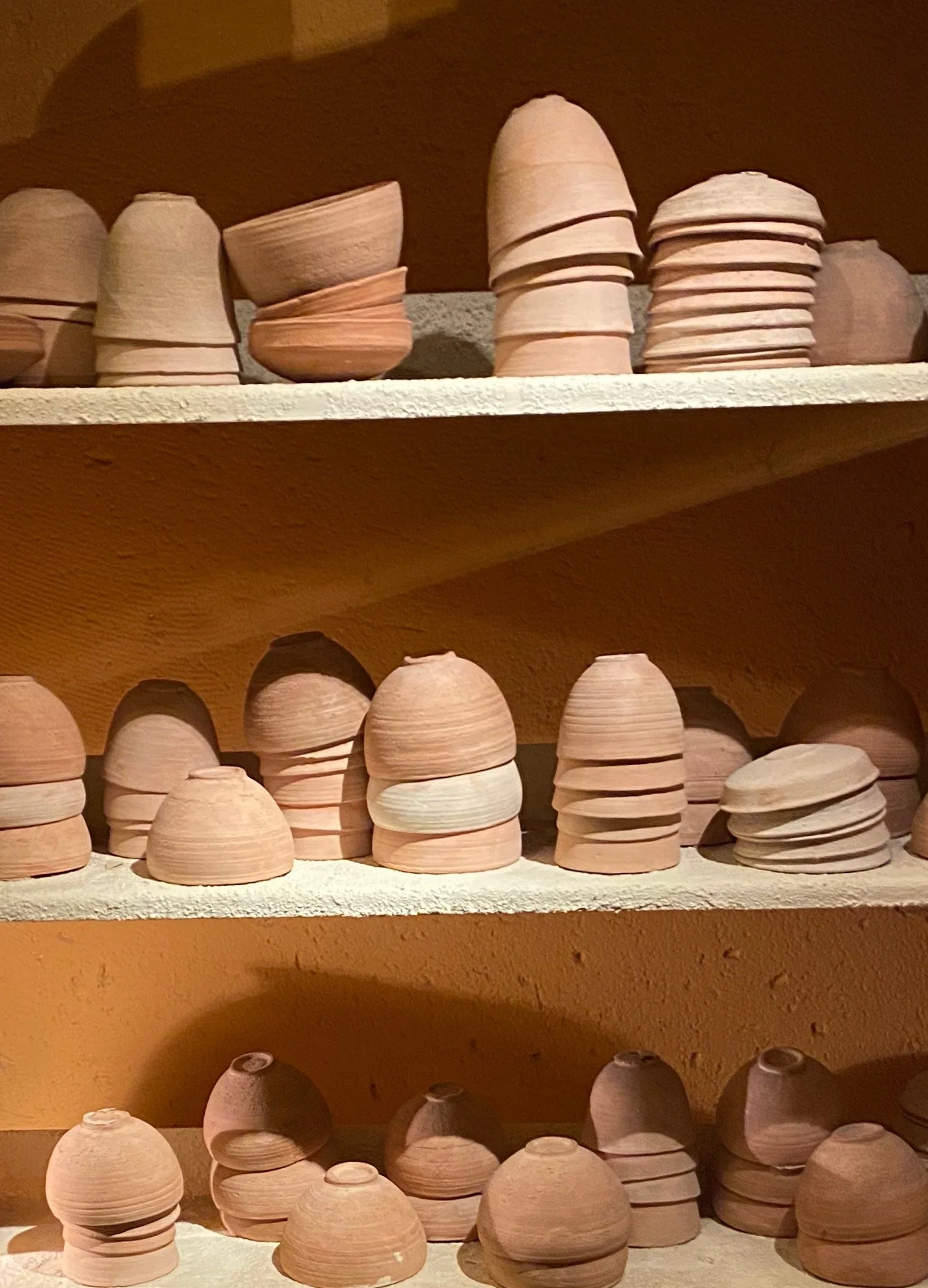
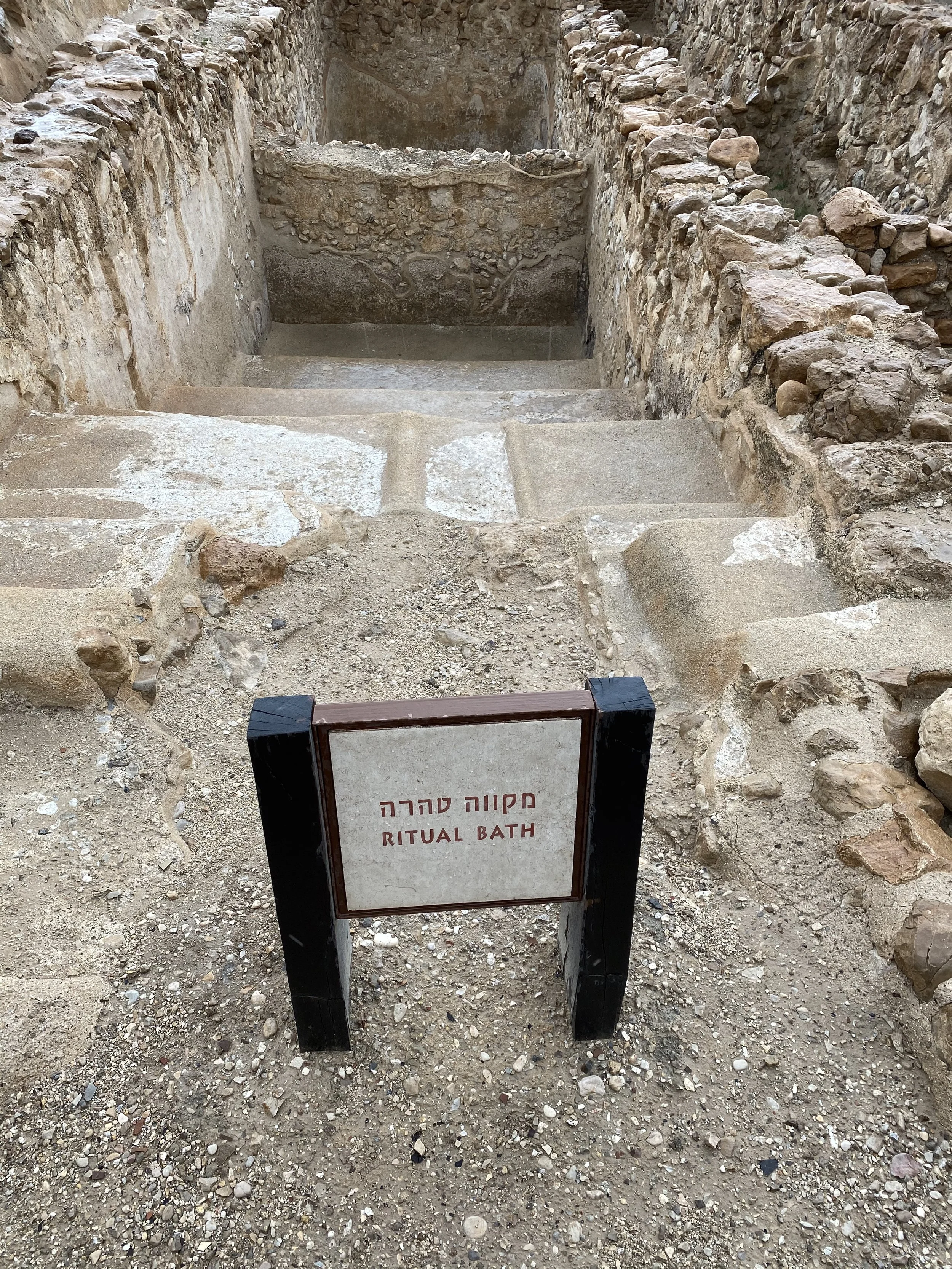
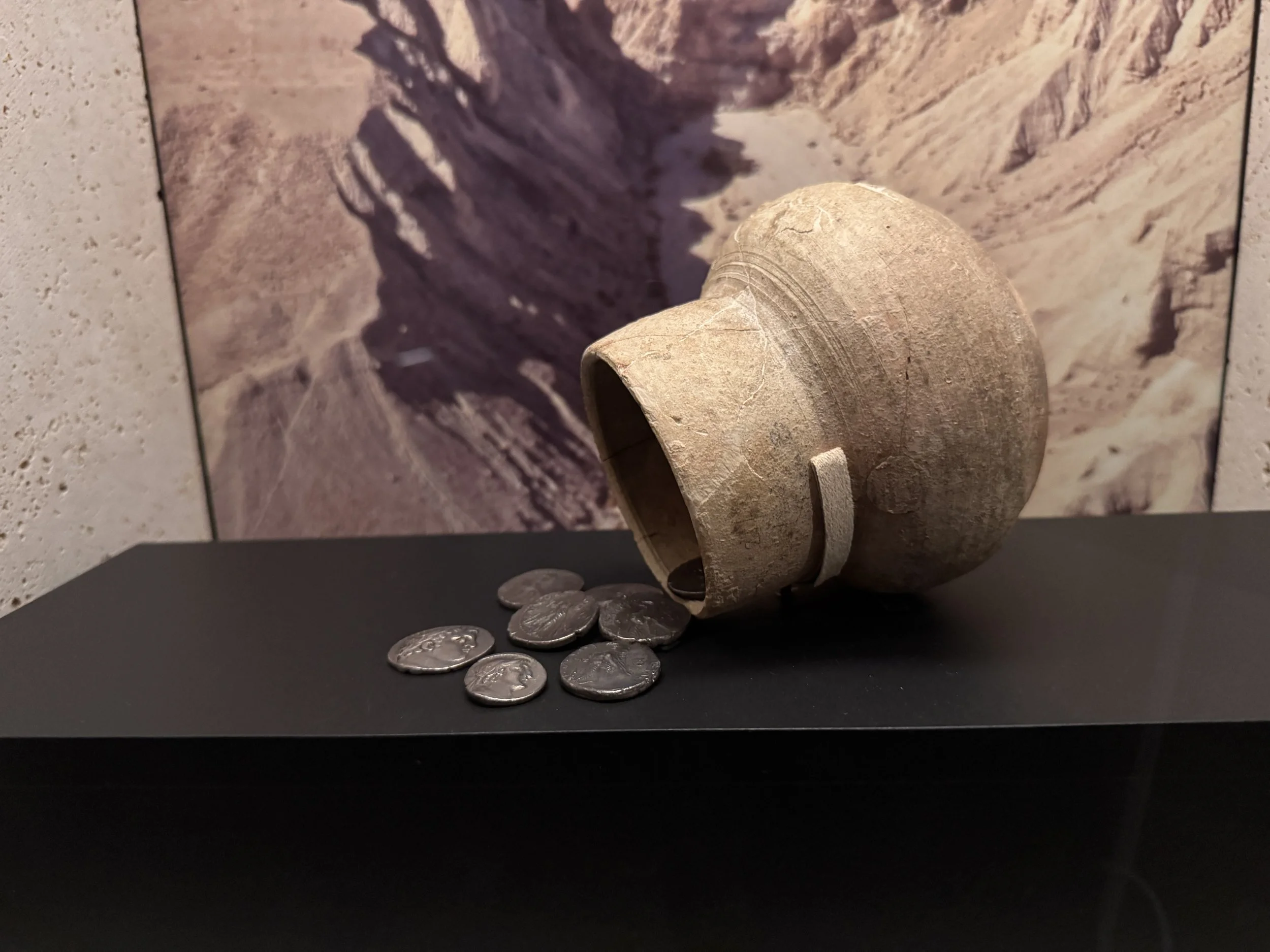
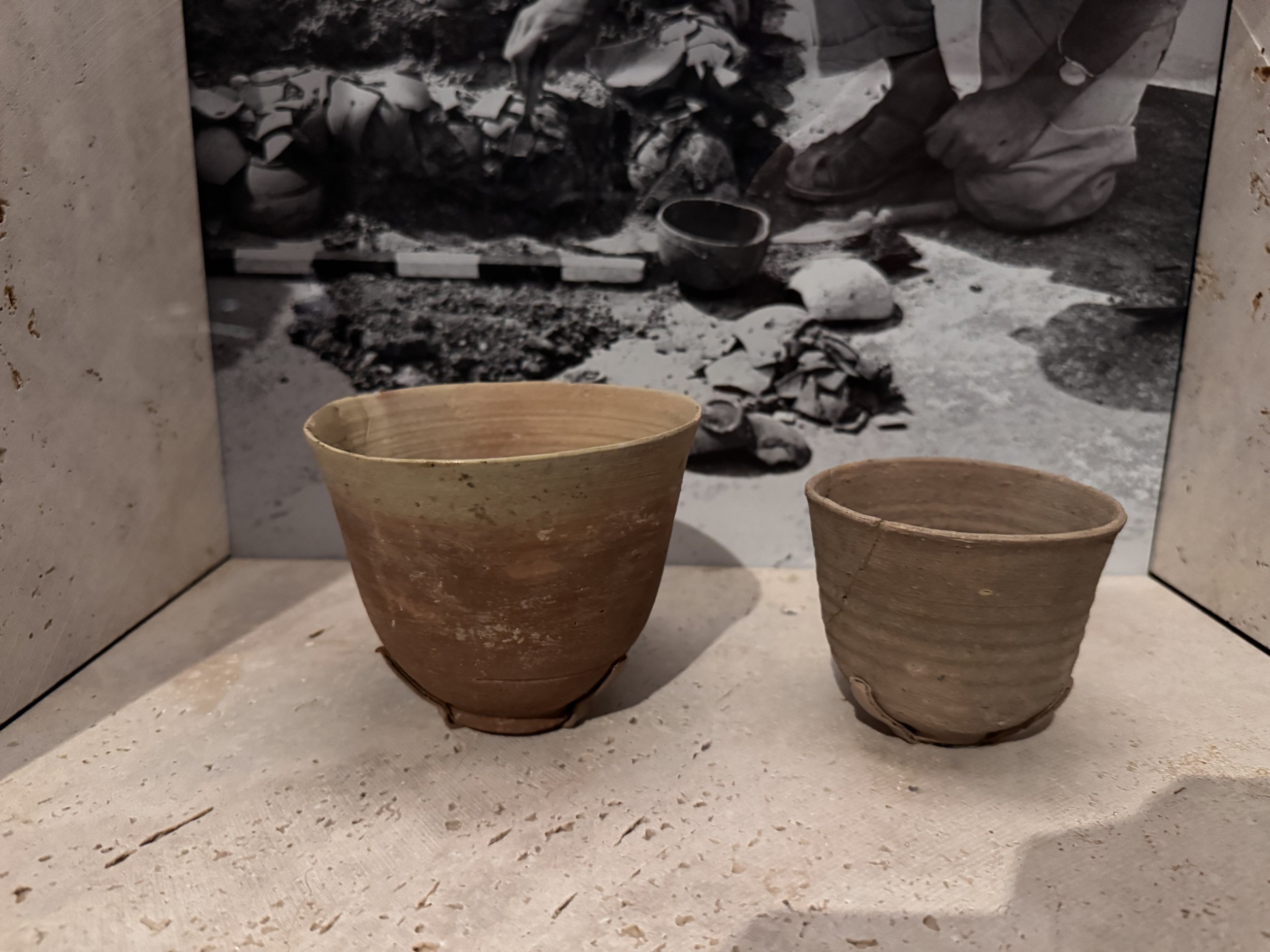
The settlement of Qumran is believed to have been a community of Jewish ascetics called the Essenes. They practiced a very strict communal lifestyle focused on studying and copying scripture and other important texts. Archeologists studying the site of Qumran believe it to have been inhabited from approximately 100 BC to 68 AD when it was destroyed by the Roman army during the time of the Jewish revolt. The excavations at the site have revealed mikvehs (ritual Jewish baths for purification), a communal hall and kitchen, a watch tower, cisterns and other living spaces. Many clay vessels have been found at the site and many ink wells. The site is 1 mile from the Dead Sea and about 6 miles south of Jericho. But of course the most famous thing about Qumran is the discovery of the Dead Sea Scrolls.
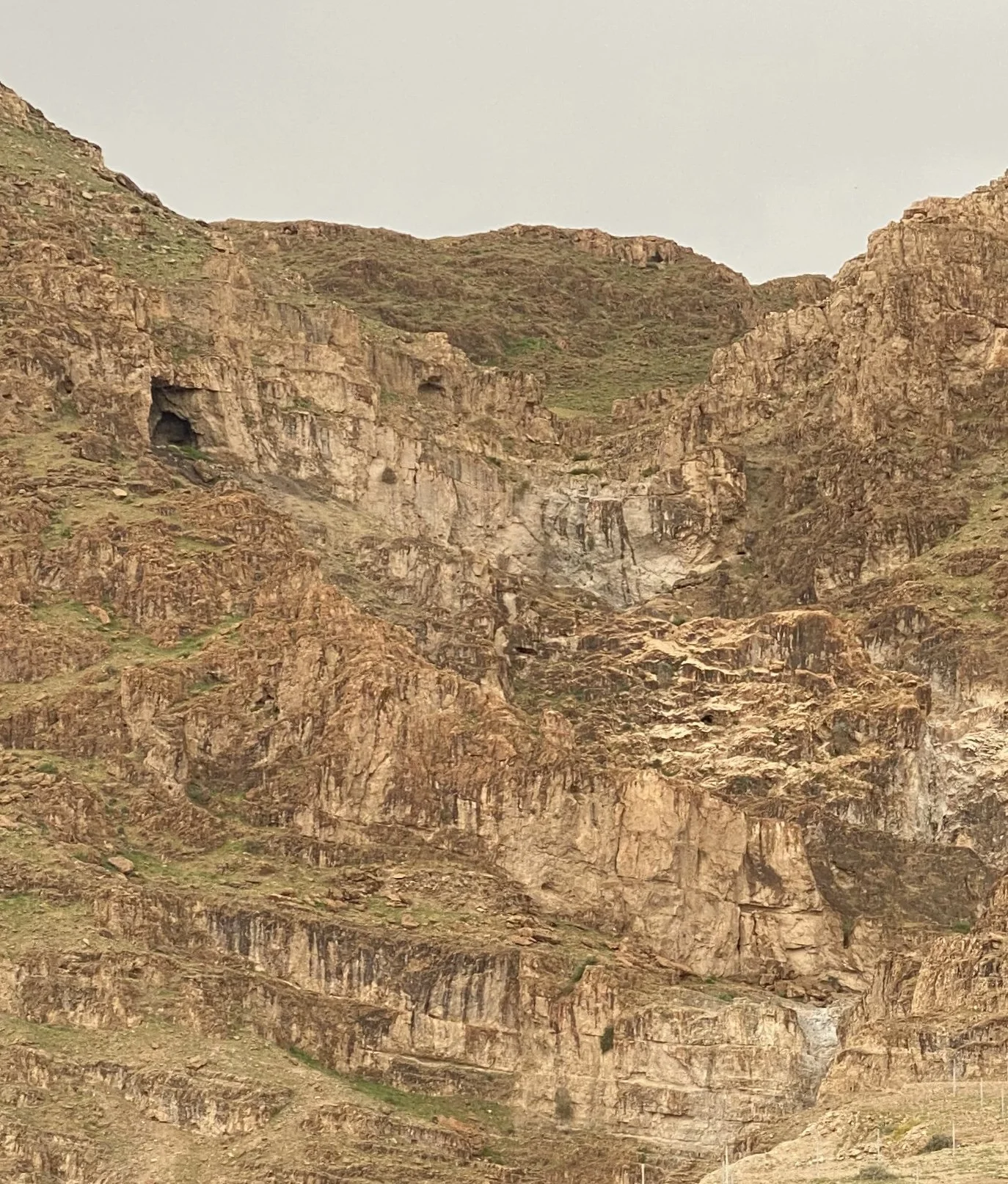
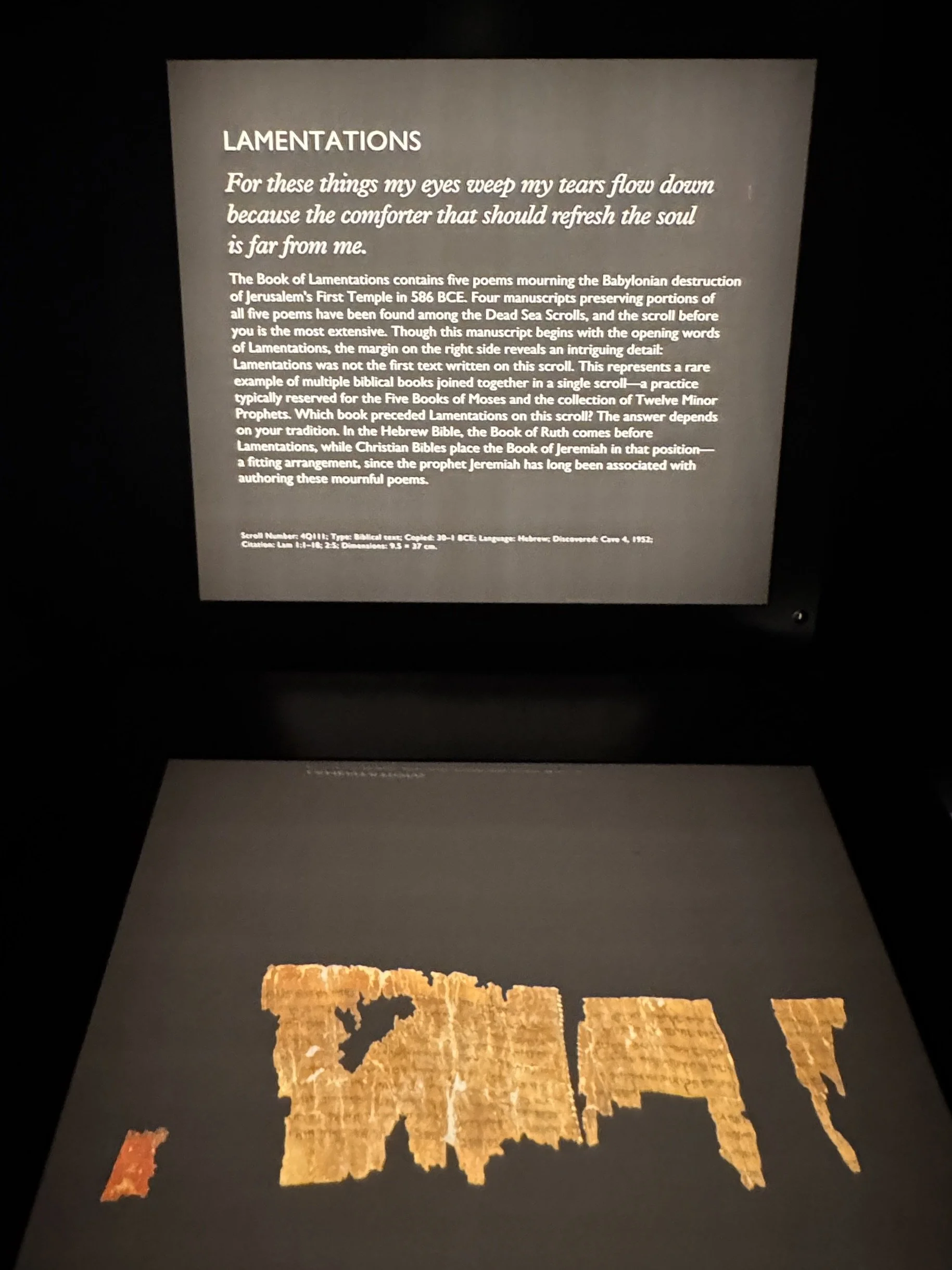
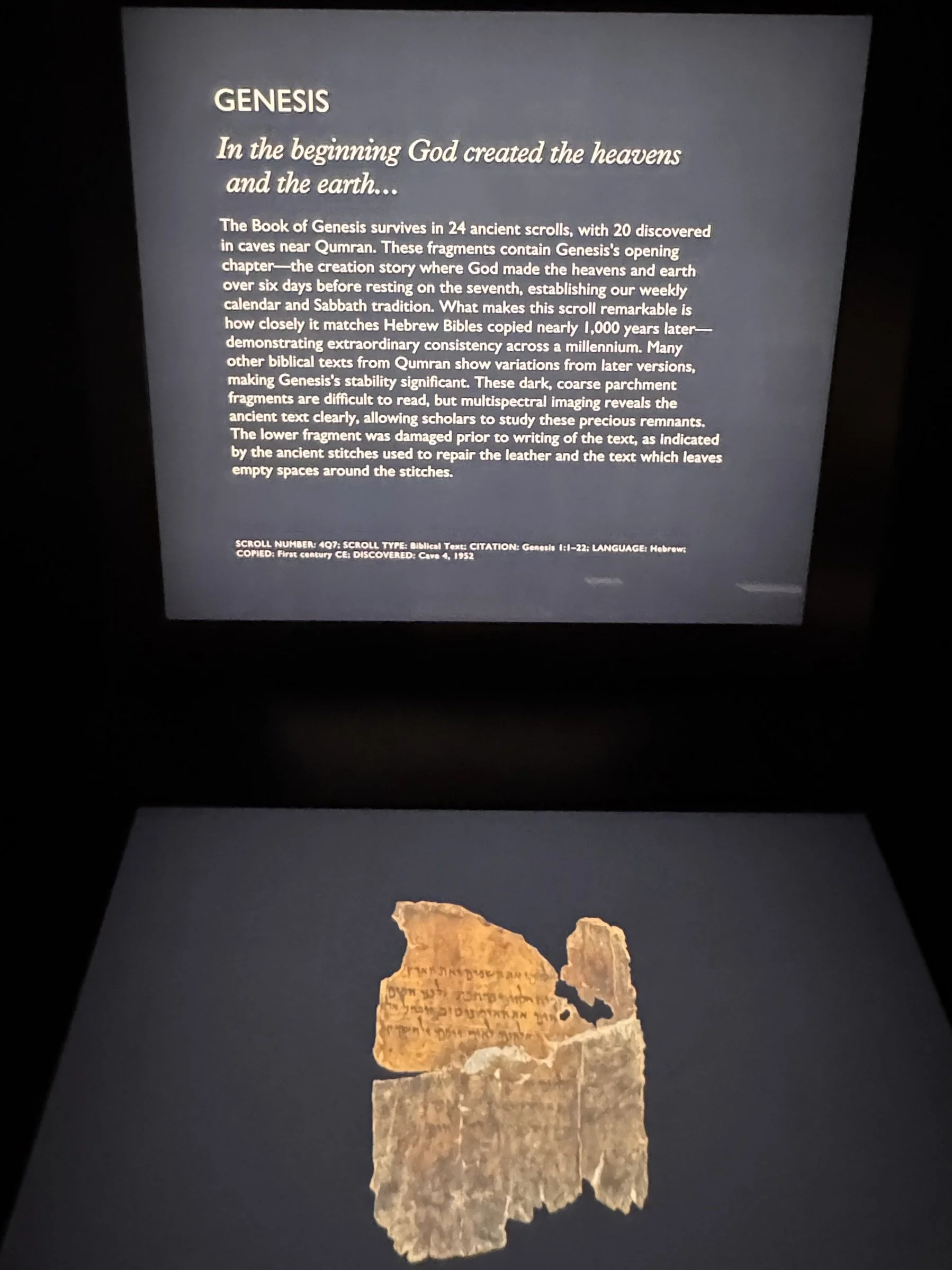
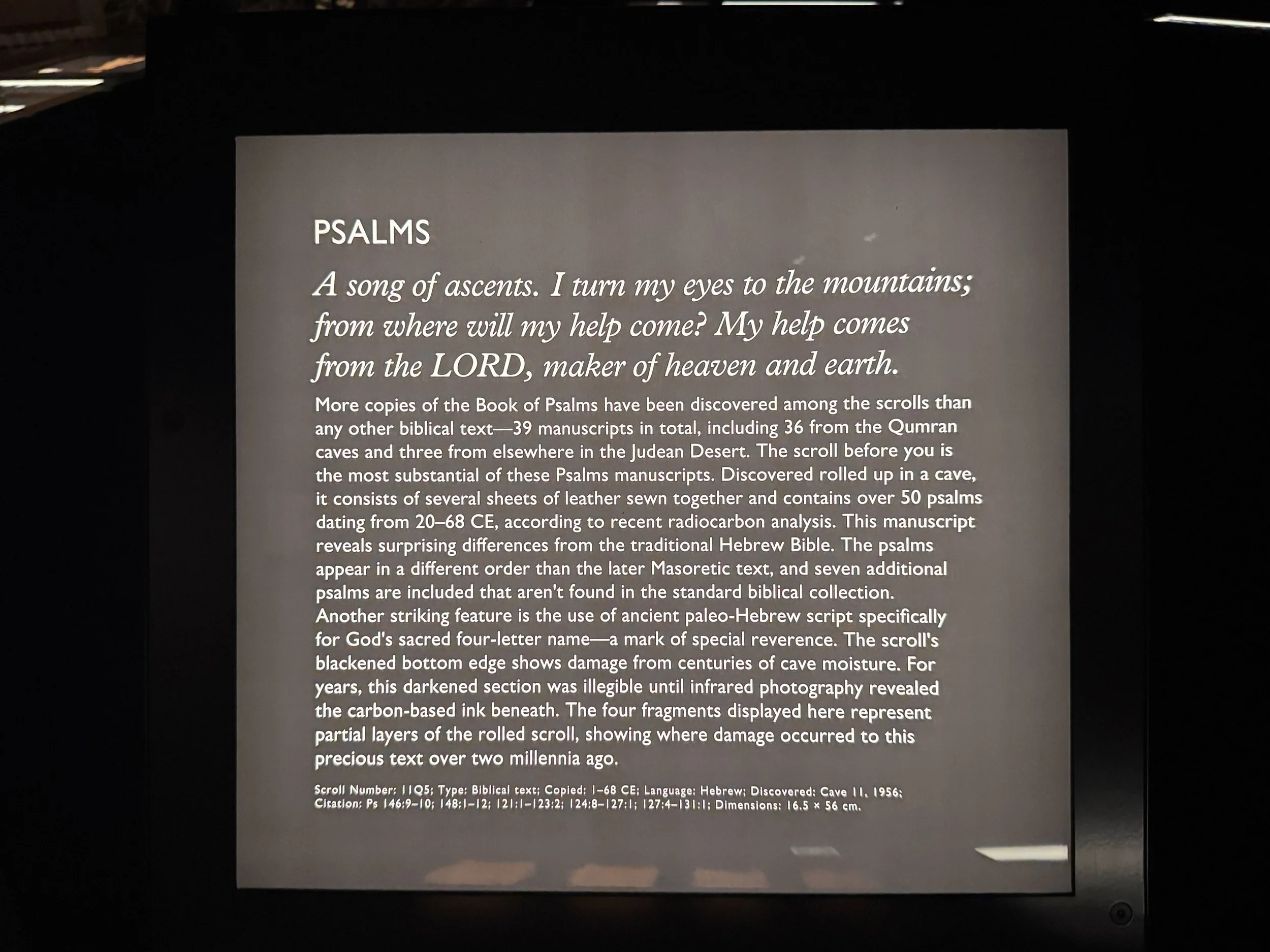
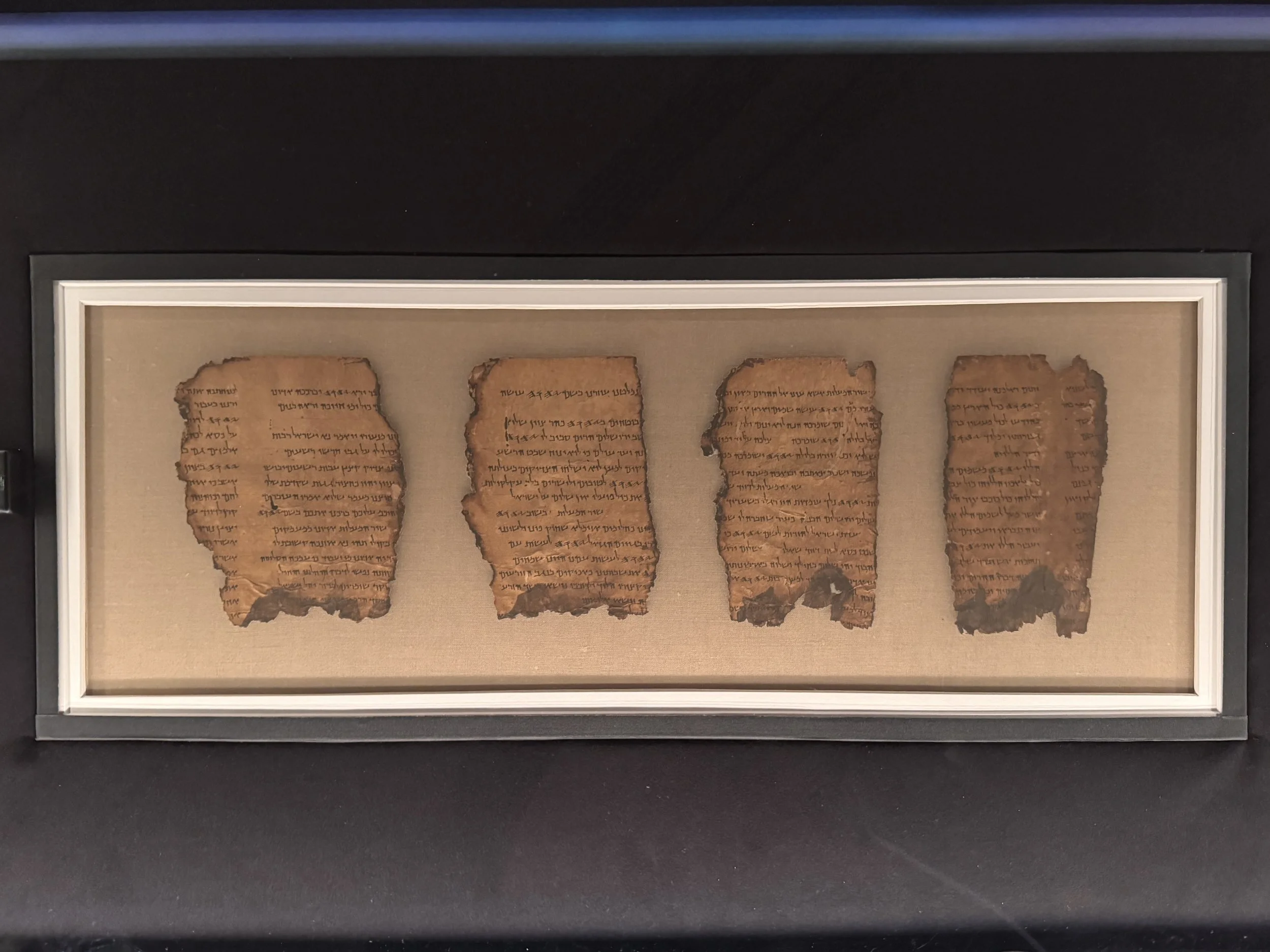
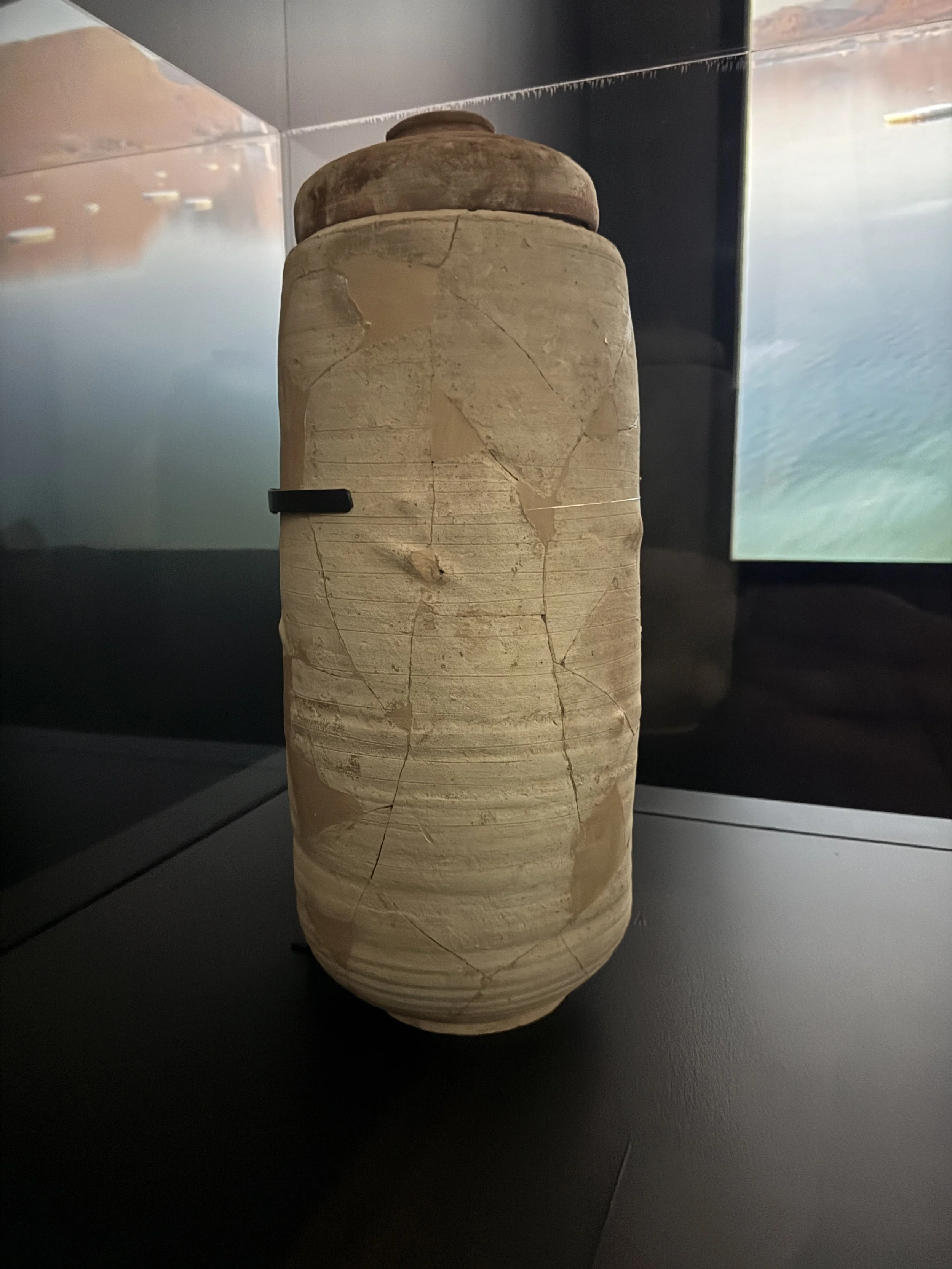
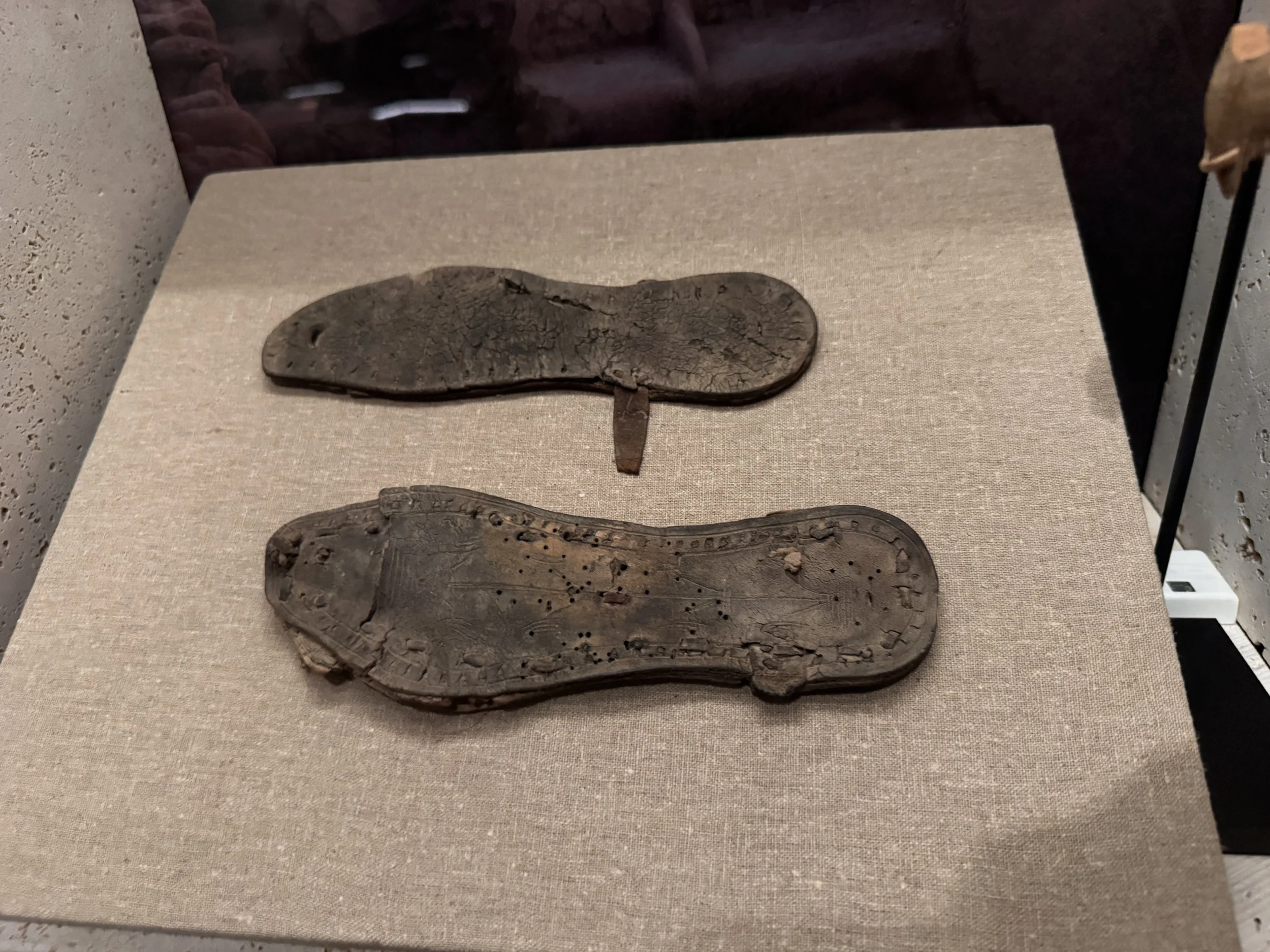
The story is that around 1947, Bedouin shepherds discovered the first of the Dead Sea scrolls when rocks tossed into a cave broke storage jars containing copies of ancient texts and scripture. These text were written in Hebrew, Aramaic and Greek on parchment. Further investigation in the subsequent decades found 11 caves in the hills above Qumran with stored parchments in clay jars. Since that time, translating and preserving the finds has been an ongoing project. The Shrine of the Book at the Israel Museum is home to many scroll fragments on display. There are several scroll fragments currently on loan to the Museum of the Bible in Washington DC. Also on loan are numerous other artifacts from the Qumran settlement. We were excited to be allowed to take photos at the Museum of the Bible, where this if forbidden at the Shrine of the Book.
The Dead Sea scrolls contain fragments from every Old Testament book except Esther. Translation of these scroll fragments has demonstrated miraculous consistency between what were previously the oldest translations of Old Testament books and the scroll fragments. What an amazing tangible demonstration of the eternal endurance of the Word of God!
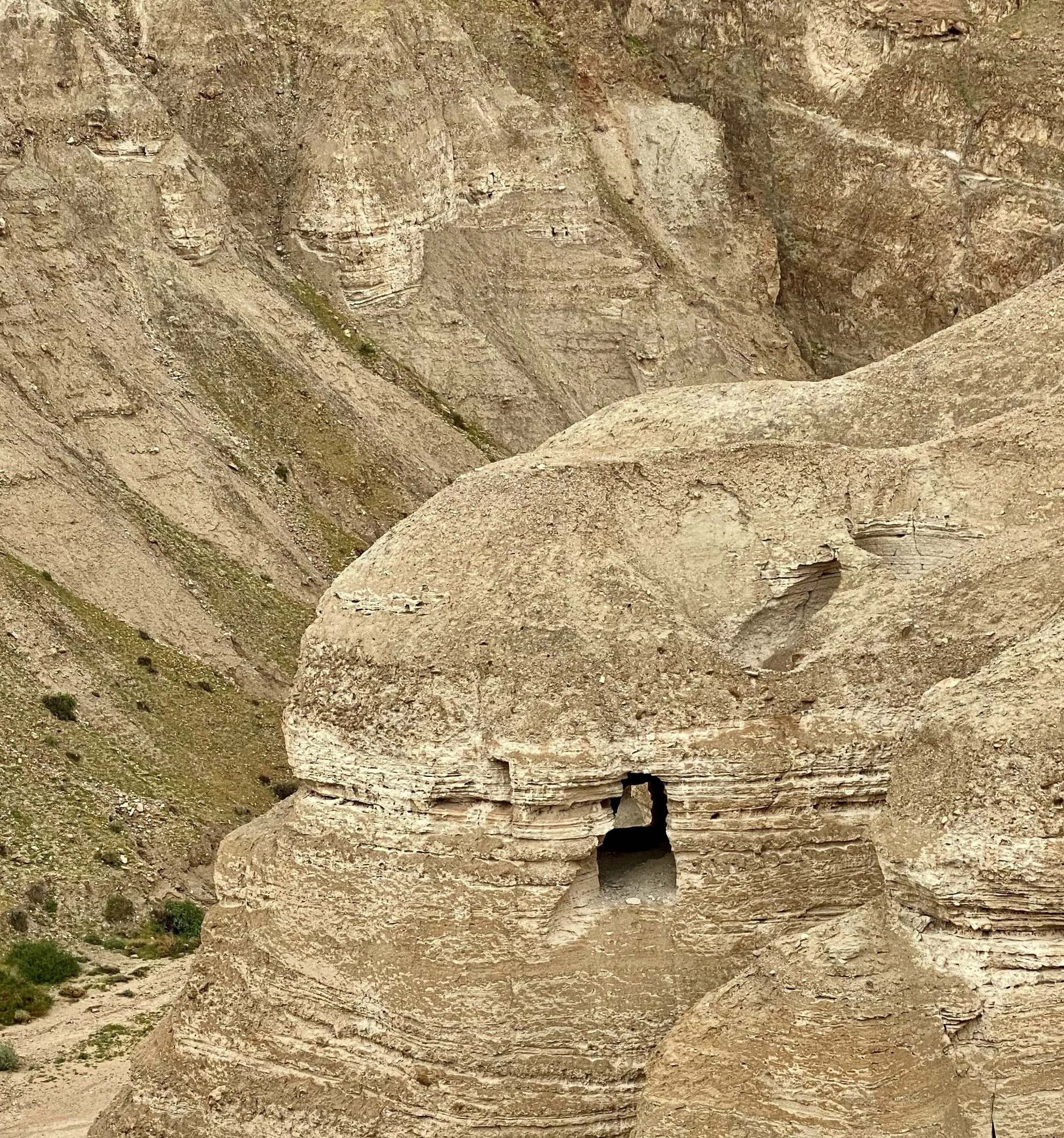
The famous “key hole” cave above the Qumran settlement, 1 mile from the Dead Sea and 6 miles from Jericho. The Essene scribes of Qumran placed parchments scrolls of sacred texts and scripture into tall clay jars and hid them in the caves above Qumran. This and the arid climate helped to preserve some of the scrolls for all of these centuries.